
SEED Student Story | How Darren Took UX/UI Beyond the Classroom and Into the Real Workplace
For many secondary school students, "design" may be an elective subject at school or simply a hobby. But when design truly comes to life, entering users' daily routines or real workplace settings, it becomes something far greater than visual aesthetics. It becomes the ability to understand others' needs, solve problems and turn ideas into workable solutions.
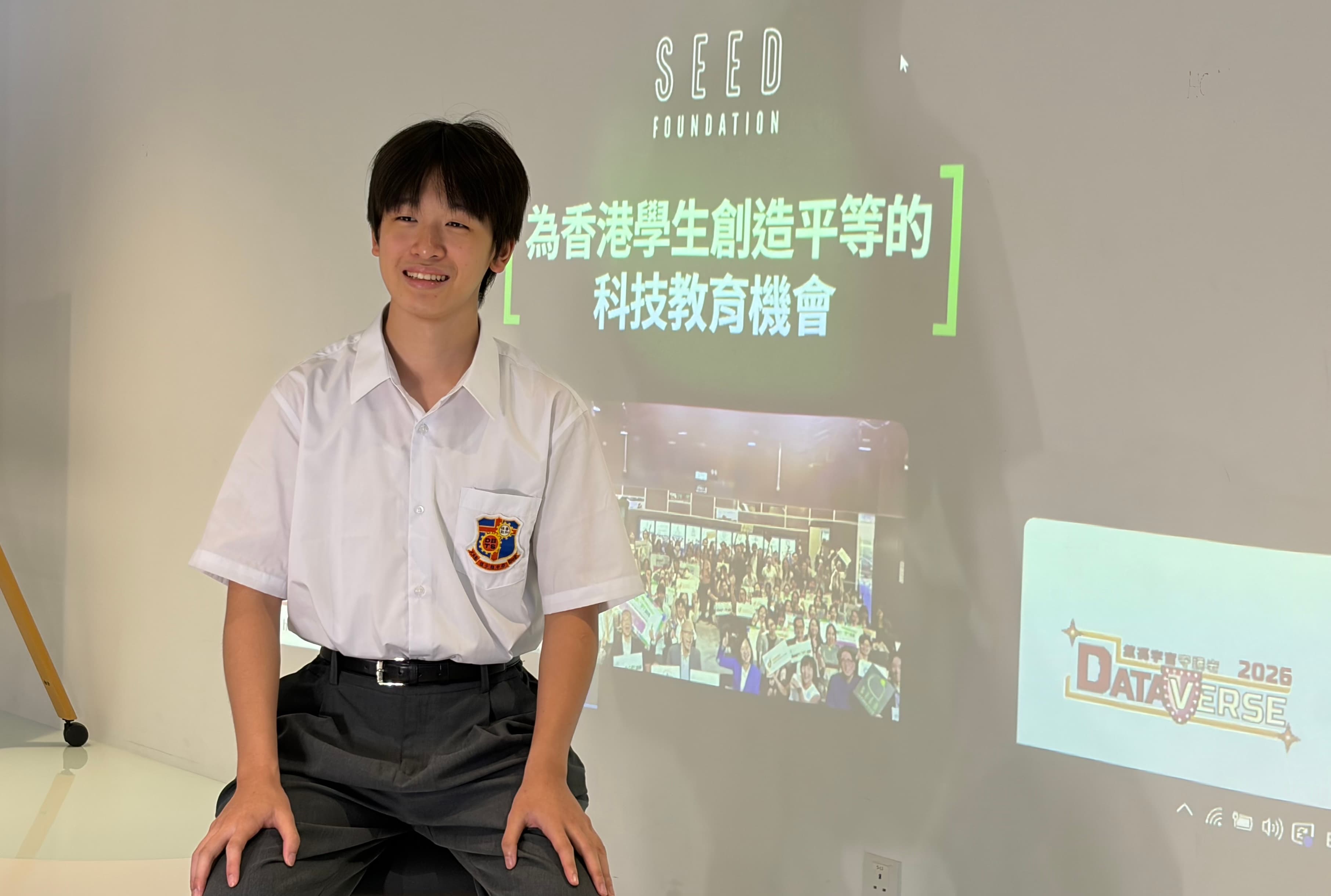
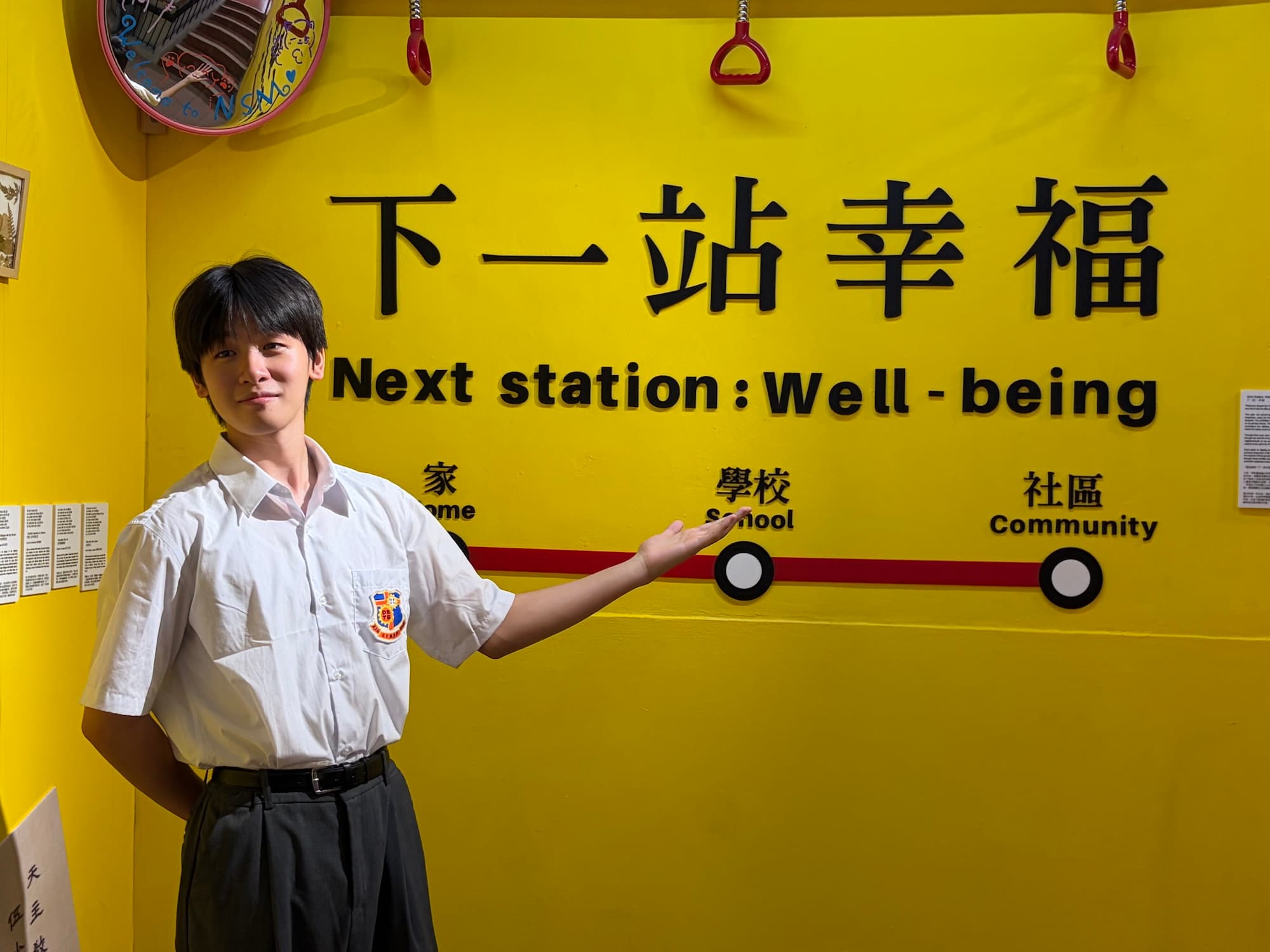
Darren Chow, a Form 5 student from Salesians Of Don Bosco Ng Siu Mui Secondary School, gradually discovered his own direction through exactly this kind of experience. He enrolled in SEED Foundation's UX/UI course and, through the Work Experience Program (WXP), completed a summer workplace experience at Hong Yip Service Company Limited. For the first time, he brought what he had learned in the classroom, including design thinking, user perspective and a growth mindset into a real professional environment.
"This WXP experience proved that the UX/UI skills and thinking mindset I learned can genuinely be applied in the workplace. It broadened my horizons and gave me a clearer picture of the kind of path I want to take and how I can continue to improve myself."
For Darren, his learning journey at SEED was not just about building skills. It was a moment of self-discovery, one that allowed him to map out his future career direction for the very first time.
Getting to Know UX/UI Through Design Studies
Darren's first encounter with UX/UI actually began through his Design and Applied Technology (DAT) subject.
He had just entered Form 4 when he chose DAT as an elective. To him, the subject was never just about drawing or completing an assignments. It was about thinking through how users would understand, navigate and experience a design he created. So when he came across SEED's UX/UI course, it felt like a natural extension of what he was already learning.
"I feel that UX/UI helps me think about design and composition from the user's perspective, making a design or product easier to understand. At the same time, it allows me to create work in my design subject that is more aligned with how users actually think."
If he had to sum up UX/UI in one sentence, Darren would say it is about placing yourself in the shoes of an everyday user, then stepping back into the designer's role to ask: what kind of design would make this easier to understand and more comfortable to use?
This practice of perspective-taking became the most important starting point in his learning. Design, at its core, is about responding to what real users truly need.
The UX/UI Course That Opened Up New Possibilities with Design Tools
Among all the stages of the course, what excited Darren most was learning Photoshop at the very beginning.
Before he started, he assumed Photoshop would be something like the editing apps on his phone, adjusting filters, cropping images, and changing colours. But stepping into SEED's classroom revealed a very different reality. Professional design tools were far more complex than he had imagined, with layers of functions and logic that required careful guidance to navigate.
From knowing nothing about the tool to eventually designing a poster from scratch, the process involved plenty of trial and error, exploration and patient support from his instructor. For Darren at the time, it was both a fresh and genuinely challenging experience. And it was precisely this feeling of building something from nothing that deepened his interest in design.
Designing a Website Interface for Stray Cats and Dogs
Later in the course, Darren collaborated with his teammates to design a website interface centered around helping stray cats and dogs.
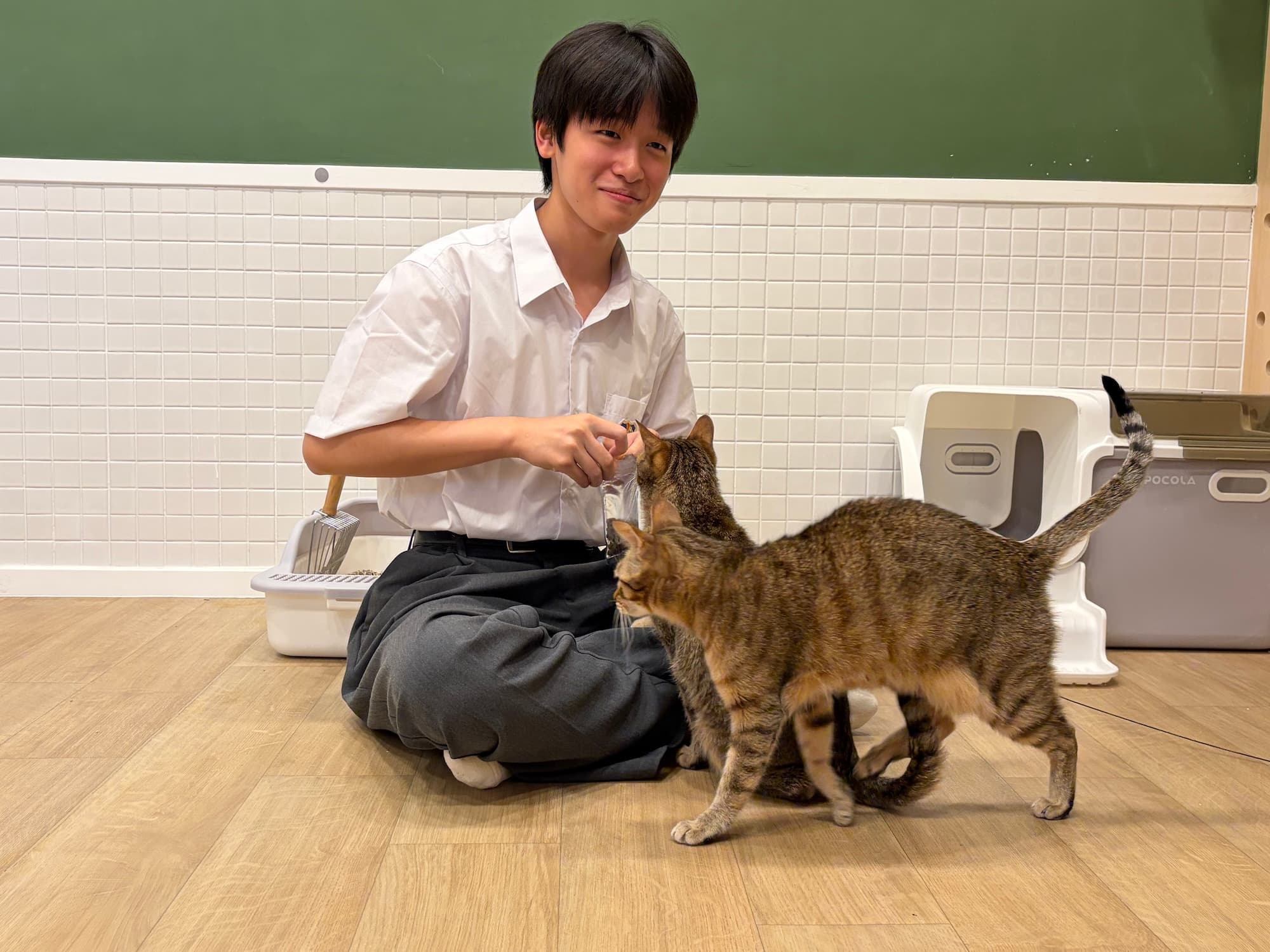
Drawing inspiration from the popular concept of cat and dog cafés, they imagined a space where stray animals that had passed safety checks could be brought in to interact with visitors. It would give the animals a chance to experience human companionship and care, while offering visitors a place to unwind from their busy lives through meaningful connection with animals.
"We hoped to create a safe environment where the animals could be with people while also receiving companionship themselves, and where visitors could relax, achieving a sense of harmony between humans and pets."
This project opened Darren's eyes to another dimension of design. Beyond solving functional problems, design can also serve as a bridge, connecting people with animals, communities and emotional needs.
First Steps in the Workplace: An Unexpected Visit to a Property Management Company
After completing the course, Darren was selected to participate in SEED's Work Experience Program (WXP) and was placed at Hong Yip Service Company Limited.
What left the deepest impression on him during WXP was a moment during his interview. The HR representative asked a creativity-related question: what methods do you have for breaking conventional thinking and creating something new from existing things? Darren shared an idea about deconstructing two objects and recombining their elements. He used the example of an apple being red and a banana being peelable. By merging the two, you might create something banana-shaped but red, an entirely new object born from familiar parts.
He noticed a smile from the HR representative and felt that his answer had resonated. In that moment, he realized that design thinking and user-centered thinking are not confined to the design studio. They can be applied in the workplace, in everyday conversations, and in any environment. As long as you are willing to think differently and speak up, these ways of thinking can be seen and valued anywhere.
Impressing His Colleagues: From "Not Sure Where to Start" to Exceeding Expectations
During his workplace experience, Darren was assigned to design a website user interface for the company.
At first, he was not entirely confident. He had only completed the second level of the UX/UI course at that point and web design was still relatively new territory for him.
But his colleagues did not dismiss him. Instead, they patiently guided him through the logic of web interface design, walking him through the process from start to finish. Darren, in turn, gradually applied what he had learned in the UX/UI course, including his approach to composition, design thinking, and user perspective, to the actual work at hand.
In the end, his colleagues were genuinely surprised by the result.
"With the guidance of the team at Hong Yip, and the skills, composition techniques, and design thinking I had picked up from the UX/UI course, I was able to design a website interface that truly impressed my colleagues. They were very satisfied and said they did not expect me to be able to do it to that standard."
In that moment, what he felt was not just validation. It was something more grounding: the quiet realization that he truly could do this.
Growth Mindset: Not Knowing Something Does Not Mean You Cannot Do It
Beyond design skills, Darren also took away something equally important from the pre-work etiquette workshop held as part of the WXP, which was the concept of a growth mindset.
During his time at the company, he inevitably encountered situations where he was unsure, uncertain or worried that a task might be beyond him. But instead of stopping, he chose to approach his colleagues with questions, work to understand the problem and learn how to handle it step by step.
This is one of the most important connections between the SEED course and the WXP experience. The technical skills he learned in the classroom gave him the ability to put into the work task. The growth mindset gave him the courage to ask, to learn and to try, even when things felt unfamiliar or daunting.
The Greatest Takeaway from the Workplace Experience Program
"After this workplace experience, I now have a much clearer sense of what field I am actually suited for, what direction I want to head in and what my future goals look like. I am more clear on how I should improve myself."
For many secondary school students, the future often feels like an unanswered question. Enjoying something does not always mean knowing whether it can become a career. Learning a skill does not always mean understanding how it fits into the working enviroment.
But this experience helped Darren connect the dots between interest, skill and work. It was no longer just about knowing he liked design. He began to understand how design could appear in different companies, different roles and different kinds of tasks.
If he could take only one thing away from this experience, Darren said it would be the learning journey itself because it carried not just skills, but also perspective, confidence, direction and a more honest understanding of his own capabilities.
A Message to Future Participants: Do Not Miss the Chance to Find Your Direction
If asked to introduce this program to fellow students, Darren would recommend it without hesitation, especially to those studying design or with an interest in technology and design.
He believes that many students opting design subjects are simply unaware that such a program exists and may not realize how much UX/UI theory can help them develop design skills, interpersonal abilities and a clearer sense of direction.
His advice to those considering applying is straightforward. Seize the opportunity to join SEED's programs. The course does not just teach you skills. More importantly, it provides a workplace experience that allows secondary school students to encounter a professional environment early, understand their own abilities, identify areas for growth and begin thinking seriously about their future.
Conclusion
From the UX/UI classroom to the workplace experience, Darren's story shows us that real learning is not just about mastering a tool. It is about discovering yourself in a real-world setting. He learned to think from the user's perspective, to work with professional tools, to ask for help when he did not know something, and to observe his own strengths and direction in a professional environment.
These experiences transformed him from a student with an interest in design into someone who can think about user needs, communicate design ideas and complete real work task in a real workplace.
And what SEED seeks to do is make that first step easier, giving Hong Kong secondary school student the space to try, to put their interests into practice and to find their direction through the process.
When the opportunity comes, the one step you are brave enough to take will almost always lead to the next.