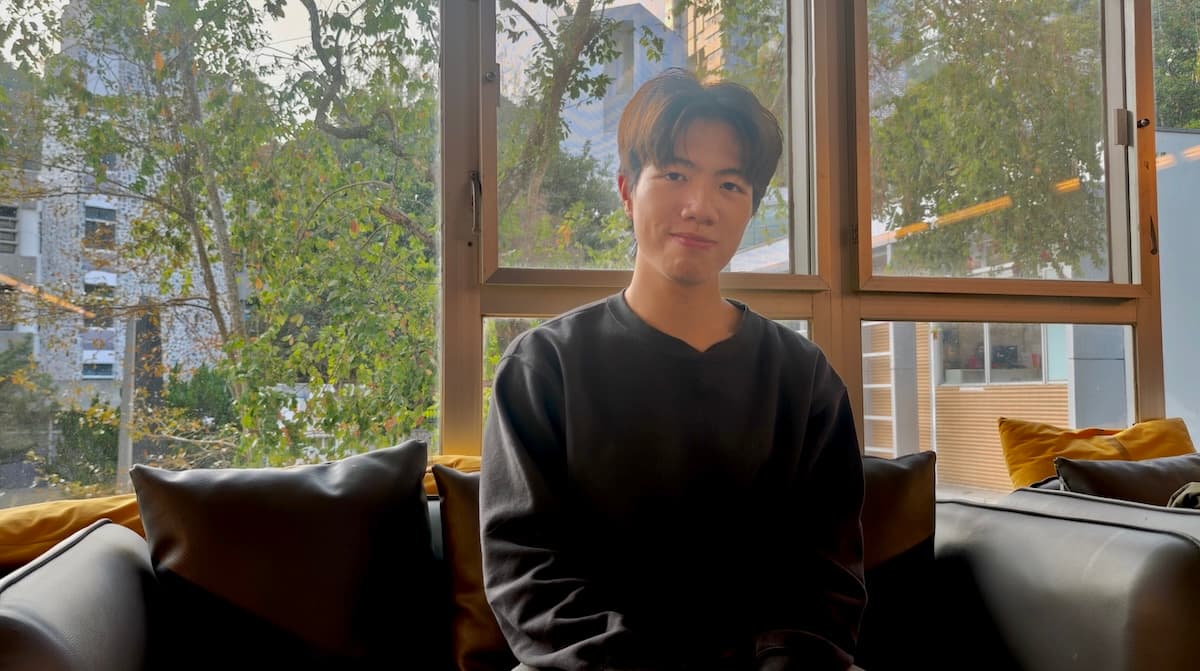

SEED Fellows Story | From Student to Teaching Assistant, Chai Defines Success Through Companionship
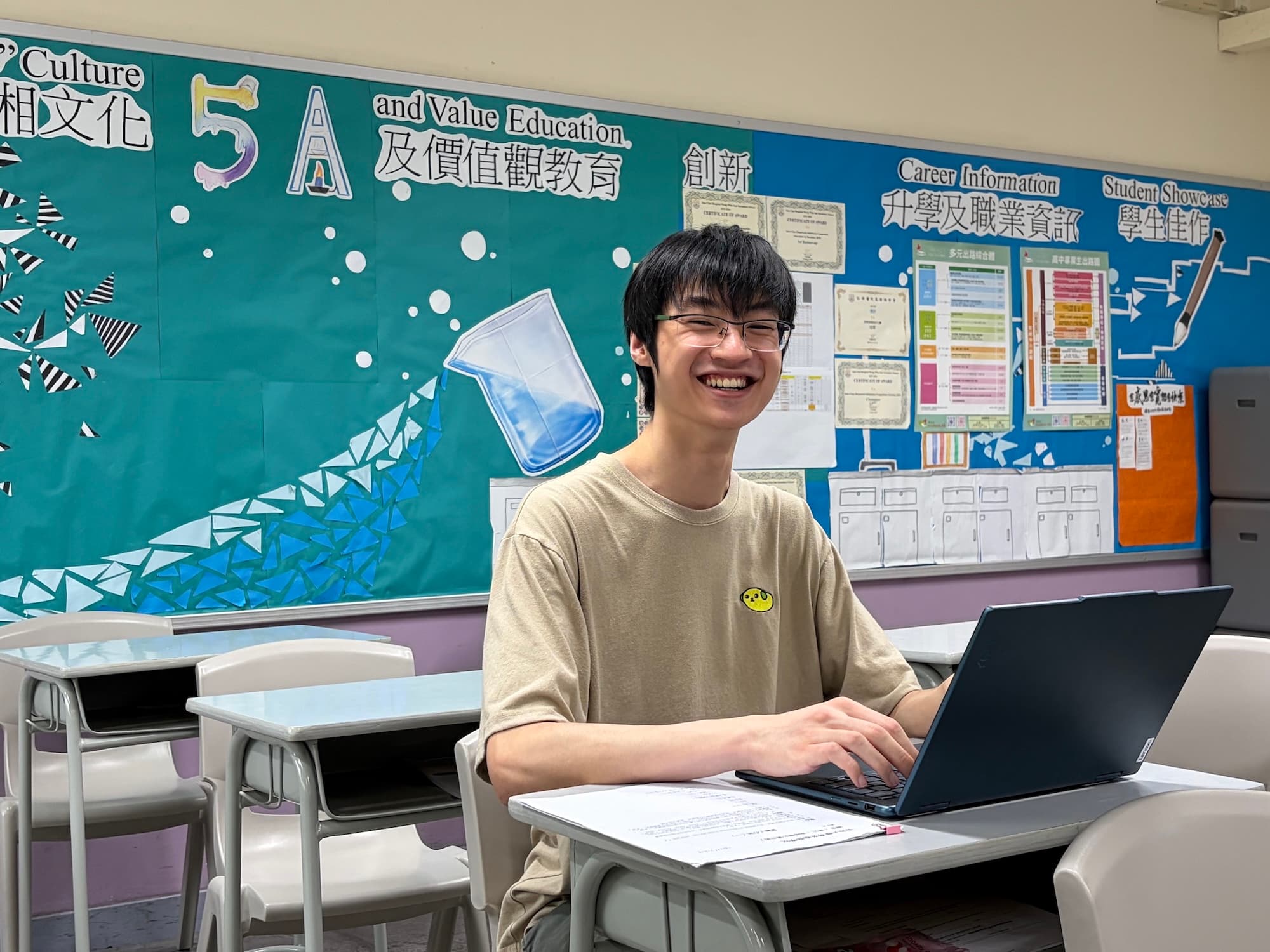
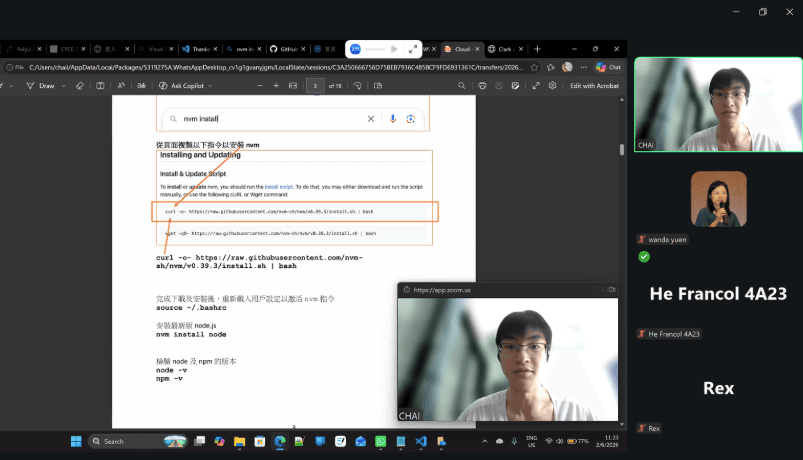
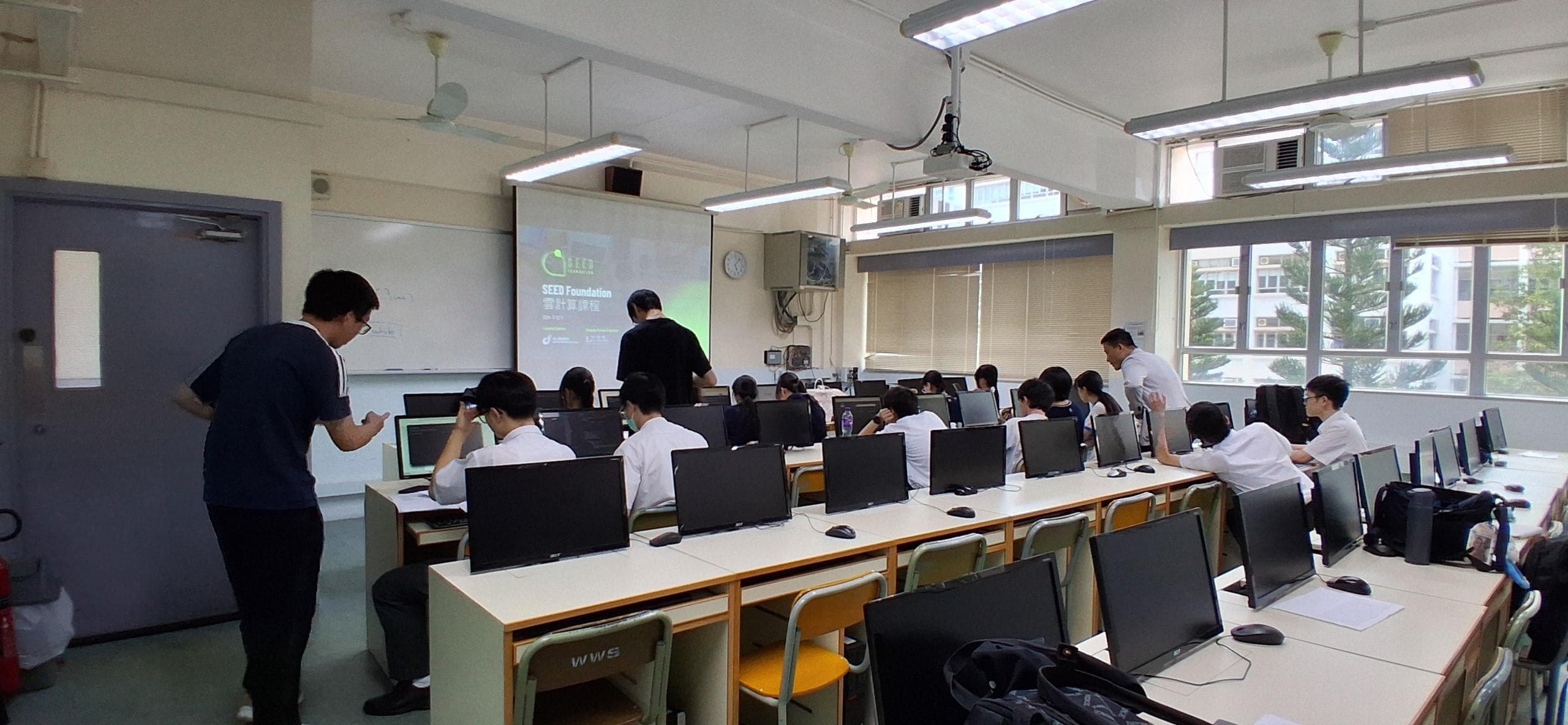
Some transformations are not born from having a clear direction all along, but from the willingness to take the first step amid uncertainty. The protagonist of this SEED Fellows story is Chai, a graduate of SEED's Cloud Computing program who is currently studying Engineering at the Hong Kong Polytechnic University's Hong Kong Community College (PolyU HKCC).
From a Secondary Four student four years ago to a SEED Cloud Computing teaching assistant today, Chai helps students complete in-class exercises and keep up with course content. He does not consider himself an "all-knowing TA". Rather, through accompanying students in their attempts and troubleshooting, he has grown from someone reserved and lacking confidence in teaching into a more proactive and self-assured individual, with a clearer sense that he thrives when solving problems alongside others as part of a team.
A Coincidence of Schedules: An Unexpected Entry into Teaching
Chai admits that his memory of the course details from back then has become quite hazy, and he had never imagined himself working in anything related to teaching. During secondary school, he had tried teaching his peers through a school society, but felt the results were far from ideal.
"I felt I wasn't a very good teacher back then, so I never considered pursuing anything in teaching."
That sense of defeat led him to conclude, for a time, that he simply was not cut out for any teaching role.
After entering post-secondary education, he received an invitation from SEED. Since his timetable happened to allow for it, he agreed to take on the role of teaching assistant with the mindset of helping his juniors and giving it "one more try." His original plan was simple: if it felt right, he would continue; if not, he would move on. But once he truly immersed himself in the work, he discovered that the role of a TA was far more complex and far more rewarding than he had expected.
Not an "All-Knowing TA", Just a Senior Who Grows Alongside You
The SEED program involves a significant amount of hands-on practice, and some students may not be able to immediately absorb the content from the instructor's explanations.
Chai shares: "When students fall behind, they rely heavily on the teaching assistant to help them catch up on what they've missed."
As he worked with more and more students, Chai gradually came to appreciate the weight of the teaching assistant role, and developed a sense of belonging, deciding to continue supporting students in the SEED classroom.
"I increasingly felt that this role carried a great deal of responsibility."
When asked about his role, he honestly admits that leading an entire lesson from the front of the classroom may not suit him best. He feels there is still room to improve his ability to explain concepts clearly, and he is not entirely sure he can energise an entire class. But rather than leading, what he truly enjoys is being present, sitting beside students and completing tasks together with them.
"I don't like directing students and pushing them to do things on their own. I prefer the supportive role of a TA — walking through everything with them together."
This identity as a "supporter" also extends to how he handles gaps in his own knowledge. Students may expect a TA to be an all-knowing figure, capable of answering any question on the spot. But Chai does not hold himself to that standard. When he is unsure of an answer, he will first try it out himself, confirm the correct steps, and only then explain it to the student. If he still cannot resolve the issue, he has no hesitation in seeking help from the instructor.
He believes that a teaching assistant does not need to pretend to know everything. What matters is the willingness to try, and the wisdom to ask for help when needed. This honesty, in turn, allows students to feel a more genuine sense of companionship.
"I'll work through the same thing alongside them, and then we'll try together to figure out where things don't quite work or where the errors are. And in the end, when it all comes together, we're all happy."
From Observation to Initiative: Seeing Himself Through Students' Needs
In the past, even when Chai noticed a classmate struggling, he would not necessarily step forward on his own — he was accustomed to waiting until the other person spoke up. But in the classroom, he gradually came to realise something:
"A lot of students don't dare to raise their hands, but they actually need help. So I slowly started to try proactively approaching them to help them solve their problems."
This realisation quietly changed him. He began to walk over to students and proactively ask whether they needed help — not because anyone required him to, but because he understood that waiting for someone to speak up sometimes means they never get the help they need.
Along the way, he also gradually learned to observe his students' situations. Some worked too quickly and skipped steps; others had not been paying attention and were unsure of where they stood. For the former, he would remind them to slow down and check through their previous steps one by one. For the latter, where students sometimes could not immediately recall their cloud platform account details or even their passwords, he would first help them confirm their account information, while leaving the password retrieval to the students themselves, before offering further support based on their actual needs.
"If they genuinely run into an error and can't get it to work, I'll help them go back over what they did before and see where the issue occurred."
This approach of "observe first, respond after" represented a genuine transformation for someone who had previously been more passive.
The Most Memorable Lesson: A Half-Hour of Determination in the Final Class
On one occasion, it was only in the final class of the course that Chai discovered a student had not completed a single lab exercise — the entire semester's practical work was virtually blank. He did not give up. Instead, he stayed right alongside the student and helped them focus on completing all the exercises then and there.
"In the end, we spent half an hour in that final class giving it everything we had, working through every single Lab from start to finish."
What he had expected would cause a significant delay ended up running only about 10 minutes over time. This experience also led him to reflect on the purpose of make-up sessions. He admits that if a student had put in effort throughout the entire semester but ultimately could not graduate due to insufficient attendance, "I'd feel it was a bit unfair." So he began proactively arranging make-up sessions for students with insufficient attendance — not merely to tick off attendance records, but to help students understand that they themselves are responsible for their own learning progress.
"I feel this is also a way of teaching them to have that sense of responsibility — if you want to pass, you need to attend your classes."
For someone who had once lacked confidence in teaching, these moments gradually brought him to understand: the work of a teaching assistant is sometimes not about imparting knowledge, but about accompanying students in completing the things they thought they had run out of time to do.
Having Felt the Warmth of SEED's Teaching, He Hopes to Pass It On
Taking on the teaching assistant role also allowed Chai to revisit cloud technology content he had learned years earlier, reinforcing his technical foundations. But he believes the greatest gain was not technical — it was a transformation in how he carries himself and relates to others.
"After being a TA, I developed a stronger sense of responsibility, and I started to feel more confident when speaking."
This change was rooted in the warmth he had experienced at SEED — the team's passion for teaching, and their genuine care for students.
"I feel that SEED's approach to teaching is not the traditional mechanical kind. It genuinely draws students into full engagement with the program, and gives them a real sense of belonging."
Having experienced that support himself, Chai hopes to carry on that warmth as a teaching assistant — allowing students to experience that SEED classes are not just about completing assignments or clocking attendance, but about learning digital skills they can actually apply in the future.
"We're not just here to teach for the sake of teaching. We genuinely have the passion and hope that what you learn, you'll be able to put to use in the future."
Knowing His Own Working Style, Encouraging Juniors to Take That First Step
Through this experience, Chai gained a clearer understanding of the working style that suits him best. He does not aspire to direct others, but rather to be hands-on, to solve problems alongside his team, and to share in the outcomes together.
"I've always preferred being in a supportive role. I don't like standing above everyone, telling people what to do."
To SEED graduates who are considering giving the teaching assistant role a try, his message is straightforward: "Just try it. You have to try anything first. I genuinely think trying is such an important step."
"Being willing to try means you've already taken your first step, and it's a decisive one. If it feels right, if you feel it suits you, keep going. If it doesn't, try something else. But most importantly, you have to take that first step — you have to try before you can know whether something is right for you."
The Impact SEED Fellows Hopes to Create: Making Every "Give It a Try" a Starting Point for Growth
Chai's story is a story about "trying." Not because he already knew the answers, but because he was willing to take that step and let the journey tell him what he was capable of and what suited him. From a student lacking confidence in teaching, to a teaching assistant who proactively approaches students and accompanies them through challenges — this path was never a straight line, but one gradually forged through every single "give it a try."
This kind of transformation does not belong to Chai alone. When every SEED student is willing to return after graduation, take on new roles, and pass on their own experiences, the cycle continues — enabling more and more people to find their place through the act of trying.