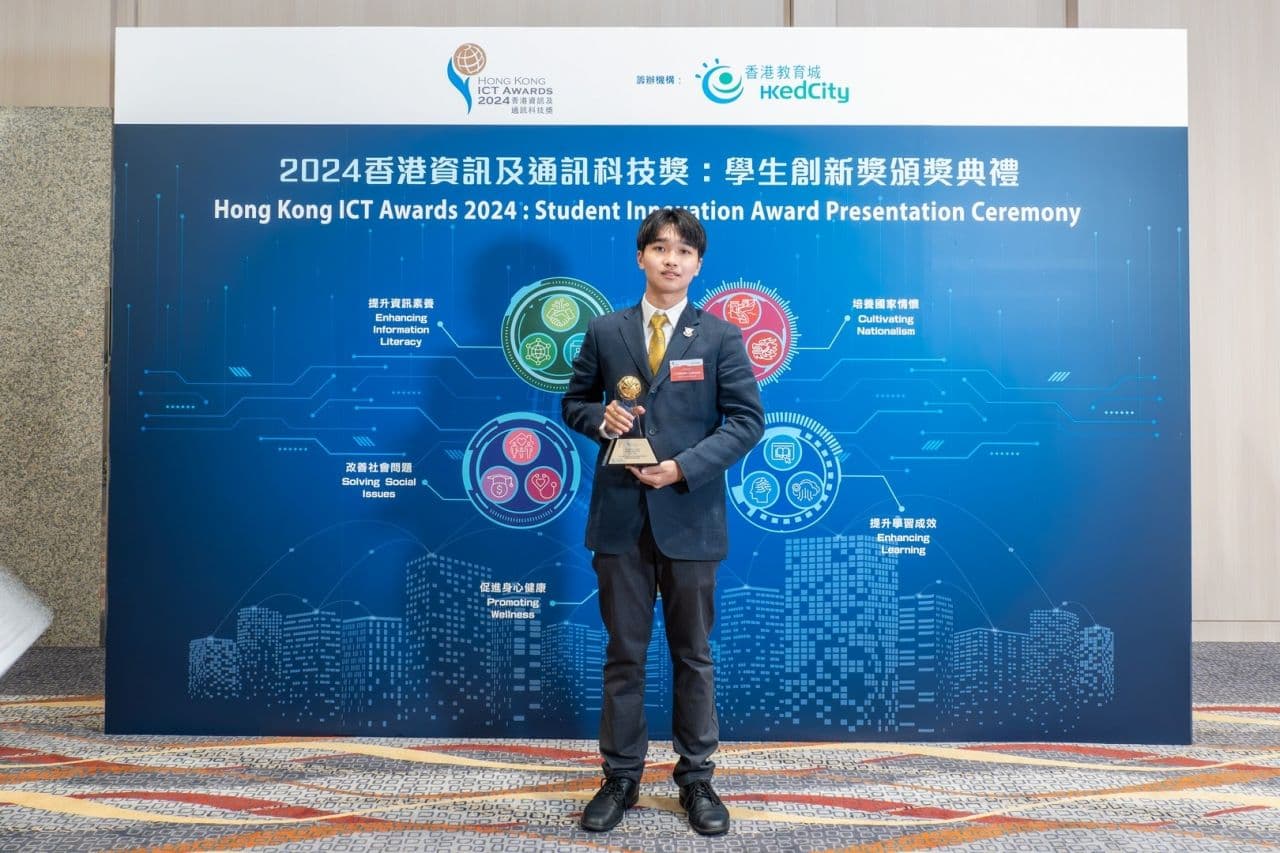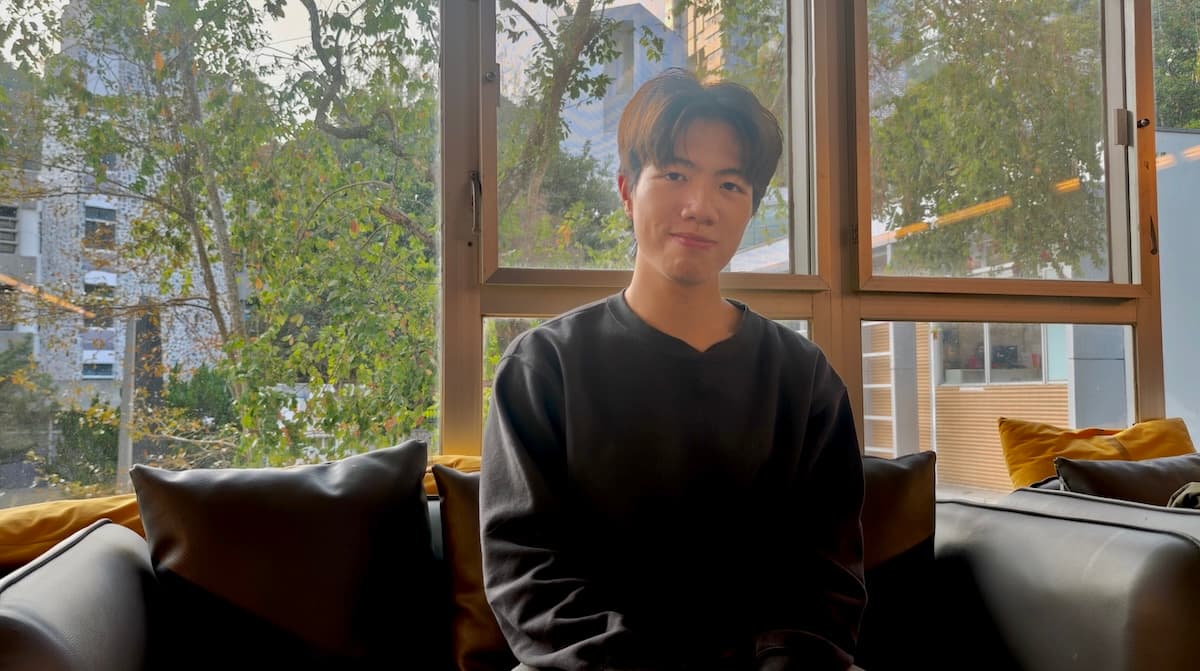

SEED Student Story | Jeffrey Discovered That Technology's Greatest Purpose is to Serve People

More often than not, the path we take isn't shaped by a grand ambition, but by something small and concrete: a recommendation, a first attempt, and then just keeping at it. For Jeffrey Ho Cheuk-him from C.C.C. Meng Min Wai College, that's exactly how it all began.
When Jeffrey first heard the term "cloud computing," he candidly admits he was "a blank slate", completely unfamiliar with the technology and worried he wouldn't be able to keep up. But it was precisely because he chose to take that first step that he gradually discovered he could keep up, and the more he learned, the clearer his direction became.
From the cloud computing course to the Work Experience Program (WXP), what Jeffrey went through was not just a technical education, but a transformation of mindset. Every time a configuration went wrong or a server failed to connect, he chose to treat failure as preparation for the next attempt.
This journey took him from a secondary school student uncertain about his future and slowly helped him carve out a path of his own.
Starting from Scratch: A Teacher's Recommendation That Started It All
Jeffrey's introduction to SEED's cloud computing course was simple: it came from a teacher's recommendation. "My teacher described cloud computing as an emerging and very powerful technology."
The first time he heard the term, Jeffrey found it both novel and intriguing, but he also had reservations: "Because no matter whether it was through school or my own research, I had never come across anything related to this."
However, after the first few lessons, his concerns gradually faded. "It turns out cloud computing wasn't as difficult as I imagined. The course structure wasn't as boring as I expected either; it was actually more relaxed and flexible, yet I genuinely learned a lot of things I couldn't have picked up in school or from online research."
Outside the classroom, the camaraderie among classmates was equally heartwarming. Jeffrey recalls: "Sometimes while doing the Lab, some classmates would run into errors they couldn't figure out. We'd even continue discussing it after class, trying to work out why it worked on your end but not on mine. Those who got it done were also very willing to help those who hadn't; we'd work together to complete the Lab." That spirit of mutual support became one of the most memorable parts of the course for him.
The Most Memorable Moment: Building a Photo Album of His Own
Jeffrey recalls one particular hands-on task that left a lasting impression: building a personalised photo album using an Alibaba Cloud server. "I felt this was quite aligned with my interests; it's the kind of thing I'd actually want to do. Because a lot of the time we're used to sharing our lives on social media, and sometimes you think about building your own website to host things on your own terms. This photo album was essentially the kind of project I'd always wanted to create."
This exercise gave him his first real sense that cloud computing wasn't some distant, abstract concept, but something that could connect meaningfully to his own life and interests. When technology truly integrates into everyday life, the meaning of learning becomes something else entirely.
From Level 1 to Level 2: From Coding to the Cloud
Jeffrey rates the practicality of both stages using scores. Level 1, which focused mainly on coding on his own computer, such as building a Habit Tracker, earned a 7 out of 10 for practicality. By Level 2, when he began working with cloud platforms, that score jumped to 8 or 9.
"When I got to Level 2, since I had more exposure to the cloud, I found it more suited to me and more enjoyable than Level 1." He identifies the key difference as being in contrast to his school's ICT curriculum: "The DSE ICT curriculum offers relatively little exposure to cloud technology, and cloud itself is still a relatively new field. By comparison, SEED's cloud computing course fills exactly that gap."
He also pinpoints the most fundamental difference between the two: "ICT class tends to be more tedious because it's mostly textbook knowledge with very little hands-on opportunity. SEED's cloud computing course is different; the majority of the time is spent on practical work, and you really have to do it yourself. So throughout the whole class, we'd be very engaged and genuinely interested." Learning was no longer passive absorption, but active exploration.
His Father's Lesson: Research First, Ask Later
Jeffrey's father works in the system integration (SI) industry and has always been his role model and idol. "The company I was placed at during WXP specialised in system integration, so my dad and I had a lot to talk about; he also taught me a lot about working life."
What his father gave him was more than industry knowledge, but a philosophy: "If you go and ask questions before you've properly prepared yourself, it's not very polite and wastes other people's time. It's better to do your own research first and only ask when you genuinely can't find the answer. That way, everyone saves time, and it also shows sincerity."
This set of values has deeply shaped how Jeffrey approaches learning: "I prefer to understand the underlying principles first, then observe and compare. I look at whether there are any steps others take that can be skipped, or whether there are steps that absolutely need to be included. I can't always follow instructions directly; I usually need to add a step or two before I feel confident it's right." In him, his father's teachings have long been internalised into a habit, a quiet composure when facing the unknown.
Work Experience Program (WXP): The Workplace Isn't as Cold as I Imagined
During his WXP at Century Technology & Consultant Limited in 2025, Jeffrey was primarily involved in system integration (SI)-related work. From setting up wireless access points (APs) on-site to following up on equipment data entry and updates, he gradually learned to verify steps methodically, maintain proper records, and proactively confirm requirements and progress with colleagues. Although the tasks were sometimes repetitive, completing each one, troubleshooting issues and seeing them through, gave him a genuine sense of accomplishment.
"A lot of the time, when you do something you've never done before, it's incredibly satisfying. Like the first time I successfully configured an AP; I already felt like I'd accomplished something I'd never managed to do before."
Even more surprising to him was the reality of workplace culture: "At first, I thought going to work would definitely be very serious: no chatting, no relaxing, sitting at your desk for eight straight hours. But then I found out that wasn't quite the case. Colleagues do communicate with each other; sometimes when we'd head to another location to work, we'd chat along the way and talk about everyday life. It was quite different from what I had originally imagined."
This experience shattered his preconceptions about the workplace and further solidified his ambition to pursue a career in IT. "After completing the entire WXP, I was even more certain that I want to go into IT in the future, and I had a much clearer sense of what I'd really need to face and prepare for." For Jeffrey, stepping into a real work environment early on helped him see the path he wanted to take, and understand more clearly what he needed to prepare for next.
IT Isn't Cold Code: The Ultimate Purpose Is to Serve People
Jeffrey's understanding of IT has never been limited to the technical side. "Even though IT sounds very cold and technical on the surface, when you get down to it, it ultimately exists to serve people."
His hope is to develop technology that can help those in need, particularly elderly people living alone. "Elderly people living alone at home may have difficulty moving around, and sometimes even if they're injured, it might not be discovered or attended to immediately. Could there be a technology that, the moment they're injured, triggers an instant alert to notify relevant people, so they can receive timely care more quickly?"
In his eyes, technology is not the end goal, but a bridge, a means of using technical innovation to respond to society's needs.
Failure Is the Mother of Success: Failure Is Not the End, It's the Starting Point for Next Time
Throughout the course and his internship, Jeffrey experienced his fair share of failures, but his attitude towards them is remarkably composed: "Every time I fail, I treat it as a reference point to help me do better next time."
He is also unafraid to share his failures with others: "Because everyone fails; no one succeeds on the very first try. What matters most is improving the next time around."
This positive approach to failure was gradually cultivated through the SEED's program. In the hands-on components of the cloud computing course, making mistakes was practically the norm, but it was precisely those repeated errors that slowly built in him a resilience and an unwillingness to give up easily. He says: "Our mindset is to never give up; keep trying until you get it done." Failure, for him, has never been the end. It is the reason to start again.
A Message to Future Participants: For Those Still Finding Their Way
Who would Jeffrey recommend this course to? His answer is clear and heartfelt: "If you're not yet sure what you want to do, or if you're uncertain about your future and don't know which direction to head in, I'd definitely recommend giving this cloud computing course a try."
"Because it's not just about knowledge; you'll also go through failure and success, and get a preview of many situations you'll inevitably encounter in the future."
Conclusion
Looking back on this journey, Jeffrey's growth was never about getting everything right at once; it was about the course providing continuous opportunities to try and adjust: finding the reason behind each mistake, and building confidence through each success. As he gradually found his own rhythm and direction, his desire to keep going became all the more resolute.
At the close of his story, he leaves one message for future participants, and it is his most genuine realisation: "When you see an opportunity, seize it. Don't let it slip away."
And what SEED aims to do is make that "first step" easier: giving young people the space to try, to put their interests into practice, and to discover along the way what direction truly suits them. When opportunity arises, the courage to step forward often leads to the next step.