WXP Corporate Interview | VOTANIC Redefines Secondary School Workplace Experience Through Mutual Collaboration
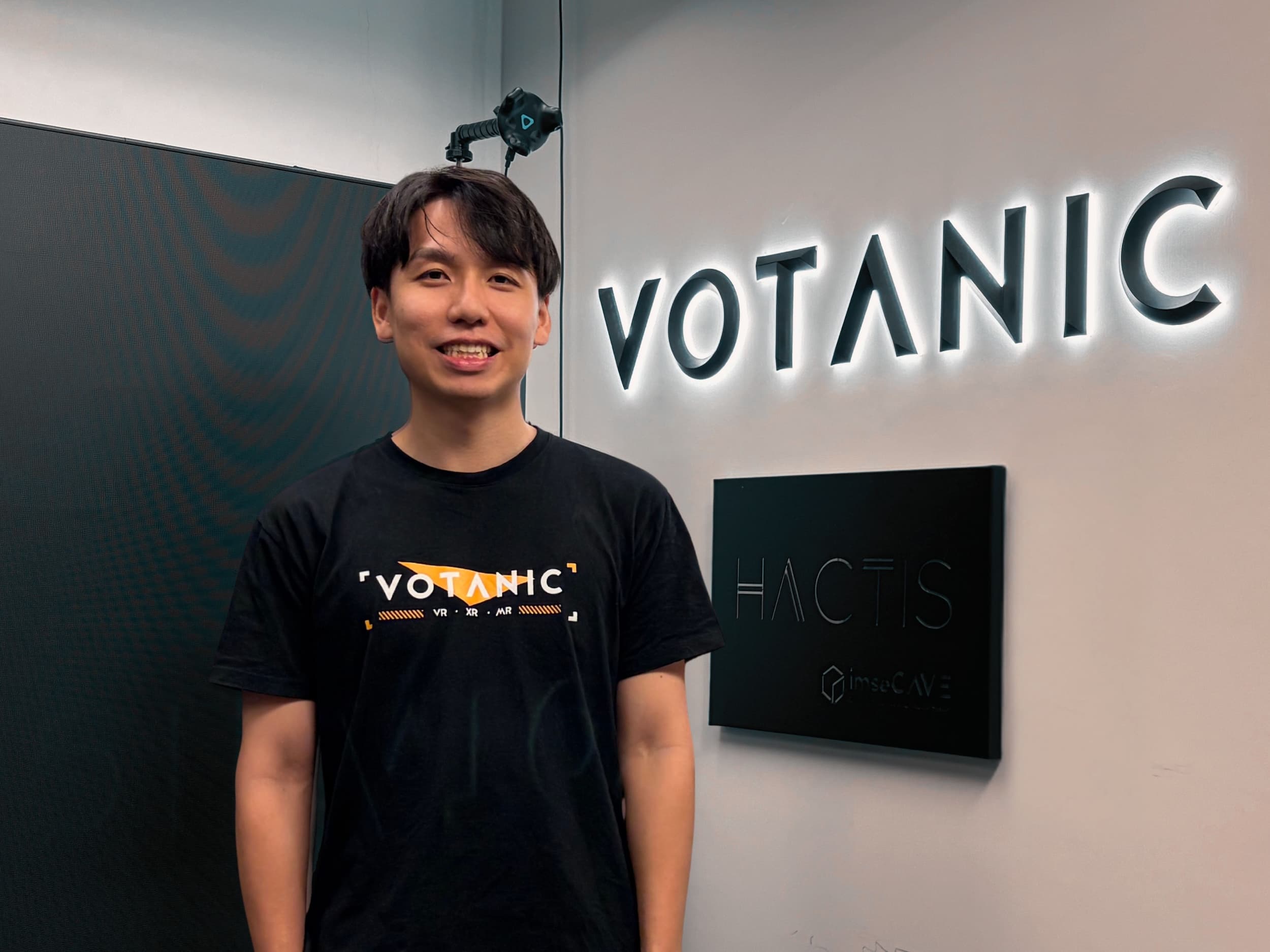
VR/XR technology is quietly reshaping the way industries operate, from cabin crew training at airlines to immersive learning in classrooms. This technological wave is arriving faster than most people anticipated, and it is startups like VOTANIC that are responsible for turning this technology into real, deployable solutions.
For students enrolled in SEED's Program, having a workplace experience placement at a company like this is itself a genuine opportunity to put learning into practice. VOTANIC offers them more than just a seat to observe how the industry works. It brings secondary school students into the heart of the business as target users, allowing the team to gain product feedback from the perspective of a younger generation, the kind of insight that is difficult to capture internally.
Technology as an Enabler: Lowering the Barriers, Bringing VR/XR into More Contexts
VOTANIC was founded in 2017 as a technology transfer spinoff from the University of Hong Kong. The team specialises in VR/XR (Extended Reality), simulation technology and AI. Having primarily partnered with universities and higher education institutions in Hong Kong, the company has in recent years expanded into the primary and secondary school sector, serving both commercial and education markets.
On the enterprise side, VR/XR technology is frequently used to simulate high-cost training scenarios, significantly reducing employees' reliance on physical equipment. Manson shared one example from the team's collaboration with Cathay Pacific:
"For example, in our work with Cathay Pacific, they originally needed a real aircraft to train cabin crew and flight attendants. Through our XR environment combined with AI technology, they can now complete the same professional training in a virtual setting at a significantly reduced cost."
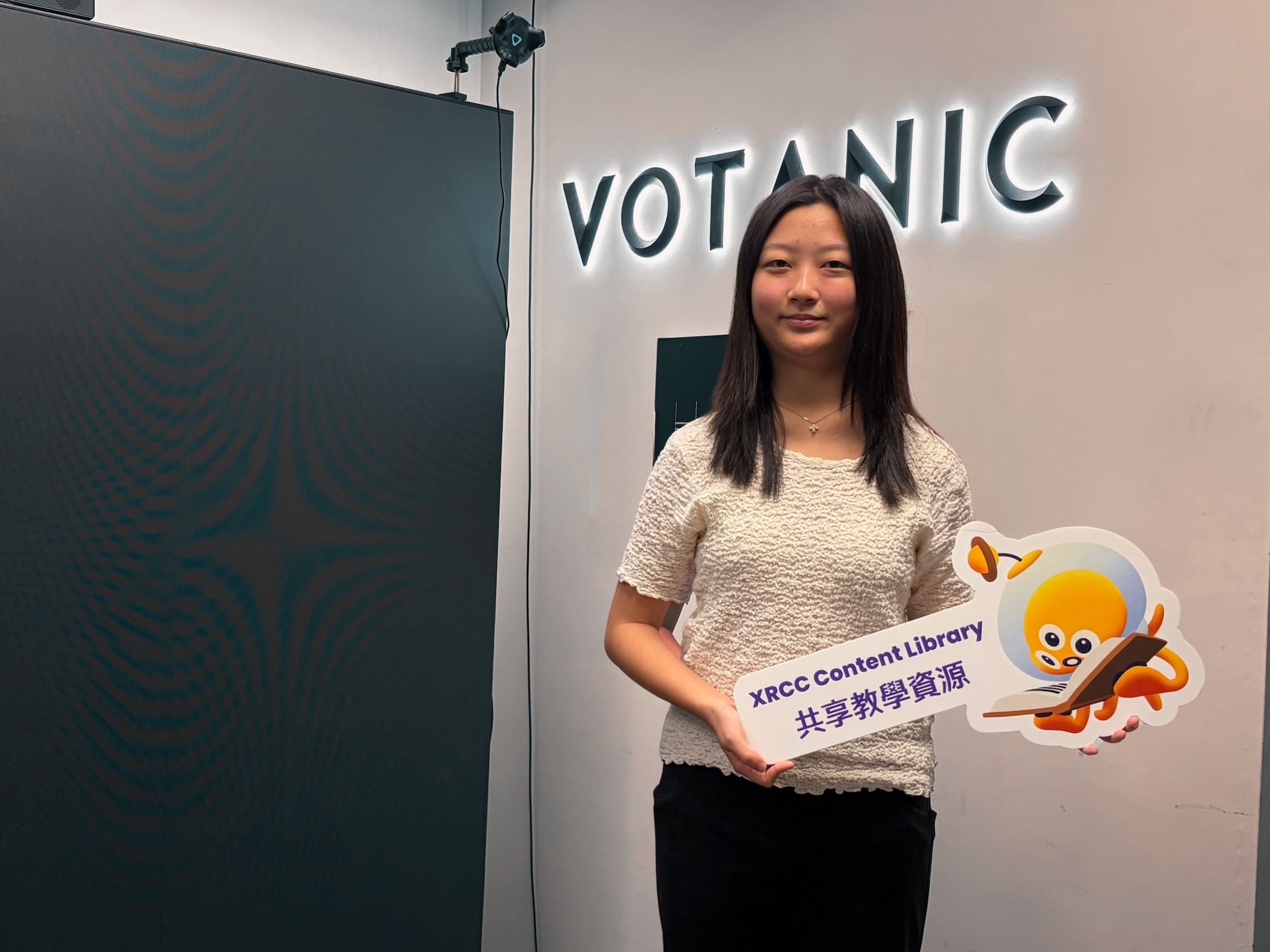
On the education side, VOTANIC has developed its own product, XRCC (Extended Reality Content Creator), a creation engine designed to allow non-technical users to build XR projects without specialist knowledge. The intended users of XRCC include primary and secondary school students.
However, for the development team, this group of users has always been one of the hardest to reach directly and one of the most difficult to obtain genuine feedback from. Bringing in secondary school students through SEED's real-world Workplace Experience Program (WXP), and having them use the product as part of their placement, became the most direct way for the team to gather firsthand user perspectives.
Filling the Gap: Real Perspectives from Young Users
Since most of the core development team comes from a research background, they have grown accustomed to technical details and inevitably carry a degree of perspective gap when it comes to the experience of first-time users. For VOTANIC, secondary school students are not just an immediate source of productivity but the most direct target users of their product.
"Our product XRCC is designed for everyday users. We need enough users to tell us whether someone can actually use it from the perspective and understanding of an ordinary person and still produce a project. That kind of product feedback is something we genuinely need."
SEED students are exactly the ideal source for this kind of feedback. They have a sufficient level of digital literacy to complete real projects, while still retaining the instincts and perspective of a general user. They are able to identify pain points that the development team has long taken for granted but that present real barriers to ordinary users. In the past, this kind of feedback could only be gathered through brief observations during short-term workshops. A one-month workplace experience allows the team to closely track a student's complete development journey from zero to one, capturing authentic UX pain points along the way.
Telling the Brand Story in the Language of a New Generation
In addition to providing feedback during the XR development process, SEED students also participated in the company's content creation, taking on the production of marketing materials. The team's expectation was that students would bring familiarity with the communication style of the younger generation and the ability to step outside the industry's own frame of reference. What the students actually brought, however, went far beyond that.
Manson recalled:
"For example, one of the SEED students could draw, and she used that ability to create different expressions and cute poses for our brand mascot. Even when filming a video, the ideas they came up with were different from ours, genuinely belonging to this generation, and they turned out to be more effective for promoting the company's culture."
Each student arrived with different interests and talents, whether drawing, video editing or concept creation. These abilities, which sit outside any formal job description, turned out to be among the most unexpected and rewarding contributions. As a result, the team began actively creating more space for students to participate in their own way, rather than simply completing assigned tasks. The content they produced not only enriched the company's external image but also helped reach a broader young audience, allowing teenagers to connect with VR/XR technology and the team itself in a more approachable way.
Setting the Direction: Building an Internship Framework Around Goals
VOTANIC assigned two students to take full ownership of a complete XR project, covering everything from concept and development through to quality testing. Rather than intensive classroom training, the team adopted a goal-oriented approach, beginning with interviews to understand each student's strengths, then setting tailored one-month project goals and reviewing progress on a regular basis. A dedicated team member was also assigned to provide one to two hours of daily one-on-one support, covering not just project progress but also the student's overall wellbeing.
For Manson, the intention behind this framework goes beyond delivering project outcomes:
"We hope that throughout the process, they feel minimal pressure and come away with a genuine sense of achievement. The key is having ongoing support to help them work through the challenges they face."
This is exactly the kind of workplace experience the WXP aims to provide. Students are not just stepping into a job role. They are entering a real working environment where people are willing to take the time to understand them and support their growth.
Entering the Workplace: Learning to Work and Learning to Believe in Yourself
For VOTANIC, whether a one-month placement can be truly meaningful is not measured by how many tasks a student completes, but by what they take with them when they leave. What Manson hopes most is that students will transform what they have seen and experienced into motivation, developing the habit of self-directed learning, staying curious about new technologies, learning to break large goals into smaller steps, daring to ask questions, and not being afraid to fail, ultimately taking away a way of working that is genuinely useful.
He recalled the first project review meeting, where the two students had a clear difference of opinion on the direction of the XR project. One had a practical and steady approach, while the other had ideas that were bold and imaginative. In the end, the student with the more ambitious vision chose to stay quiet and go along with the more conservative proposal.
This moment left a deep impression on the team. In a collaborative setting, young people often tend to choose the safer path, preemptively dismissing their own imaginative ideas out of concern that they are too ambitious to be realistic. This became one of the most authentic lessons VOTANIC had to offer during the placement: bold ideas do not need to be talked down by the person who has them before they are even voiced.
"The last thing we want to see is not a student failing to complete a task. It is a student who clearly has a better idea but is too afraid to say it."
A Startup Perspective: Mutual Benefit, Growing the Next Generation Together
This was VOTANIC's first collaboration with SEED Foundation. Manson spoke highly of SEED's support across process coordination, interview arrangements, student follow-up and showcase events, noting that the smooth collaboration allowed the team to focus their energy on the project and on supporting student growth. What surprised him most about the experience was the students' readiness to contribute from day one:
"The students from SEED were essentially ready to contribute from the moment they arrived. Today's secondary school students have grown up in an era with AI and a well-developed STEM education ecosystem. They have had far more exposure to technology than previous generations and are nothing like the blank slate you might imagine. So there is no need to worry that hiring a secondary school student will require a huge amount of time and effort to train them. They simply do not need to be taught from scratch. They come ready to engage, and they come ready to contribute."
This is also a testament to what the SEED program delivers. Before students even step into the workplace, they already possess real and applicable digital literacy and hands-on experience, allowing companies to bring them directly into the work without starting from zero. VOTANIC's experience demonstrates that the WXP is not a burden for companies but a genuinely mutual opportunity. Companies gain fresh perspectives from young users, while students develop their abilities and broaden their thinking in a real industry setting, taking away growth that simply cannot be replicated in a classroom.