


UXUI Design Program
Helps Hong Kong secondary school students develop real-world design skills and learn to design with AI, not merely consume what it produces.
Why User Experience & User Interface Matters
Top In-Demand Design Skills in the Digital Economy

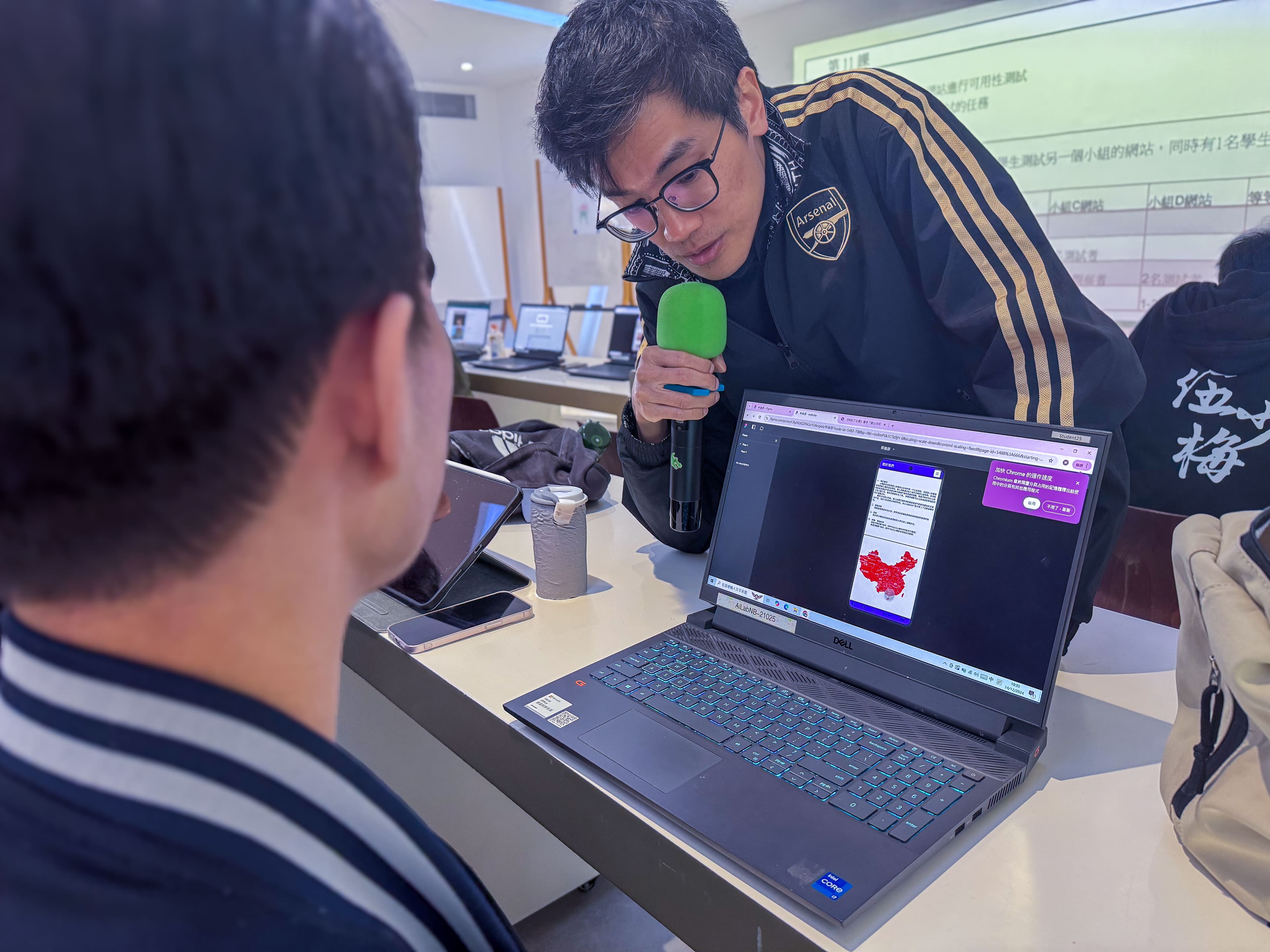
UX/UI design skill is consistently ranked among the most in-demand skills in today's digital economy, highlighted by the World Economic Forum as essential for the future of work. As AI image and interface generation becomes routine, the value shifts to people who can direct it, judge it and improve it. Our program helps Hong Kong secondary school students develop creative, practical and career-ready design skills through real-world projects.
UX/UI Teaches Empathy Through Human-Centred Design

Great digital products start with empathy. UX/UI challenges students to step into the shoes of real users — understanding their needs, frustrations and goals. The AI Literacy Learning Framework names empathy and a sense of responsibility among the qualities required for effective human-AI collaboration, and design is where students practise both. This mindset helps them think beyond their own experience and solve complex problems in any field.
Transferable Soft Skills for Any Industry
.png&w=3840&q=75)
In addition to hands-on experience with creative tools, students develop essential soft skills such as communication, collaboration, creativity and project management. These human-centred skills are valuable across every industry. Students also learn to ask what a design does to the people who use it: the privacy, accessibility and fairness questions that AI-generated interfaces rarely raise on their own.
Program Outline
Foundations of UX/UI and Visual Design
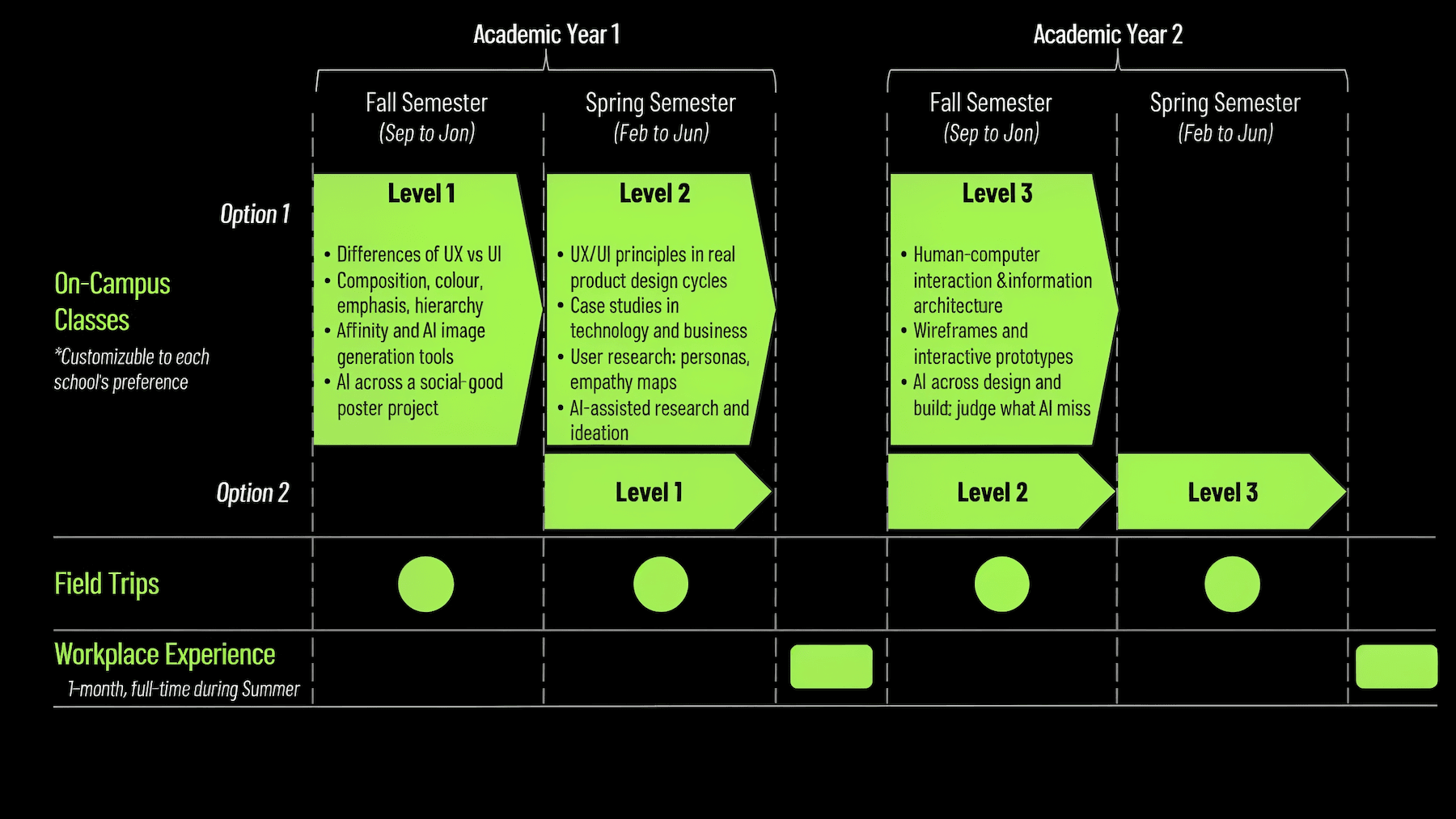
- Understand the difference between UX (User Experience) and UI (User Interface) - Learn the basic principles of visual communication and digital design - Explore professional creative tools such as Affinity and AI image generation tools - Apply core design concepts such as composition, colour, emphasis and hierarchy - Use AI across every stage of a social-good poster project: moodboard directions, a design brief, planning the poster's layers, and critiquing a draft against design principles - Compare AI-generated design output with your own work, and decide what to keep: the design decisions stay with students
UX/UI in Digital Product Design
- Explore how to create effective and meaningful user experiences - Study case studies of UX/UI in technology, business and creative industries - Learn how to apply UX/UI principles in product design cycles - Conduct user research with real users, synthesise the findings into evidence-backed themes, and frame a clear problem statement - Practice using empathy mapping, personas and user journey tools, built from real research rather than assumptions - Use AI across the research and design process, from checking interview questions for bias to suggesting themes and generating alternative wireframes - Verify every AI suggestion against original sources and real user evidence, and decide what to accept or reject
Advanced UX/UI Prototyping & Evaluation
- Learn the foundations of human-computer interaction (HCI) - UX/UI prototyping for web and mobile interfaces - Understand website structure through information architecture and user flows - Build sitemaps, wireframes and interactive web prototypes - Write clear interface copy, from button labels and form instructions to error messages - Run usability tests with classmates, and revise designs based on feedback and accessibility checks - Use AI across the design and build process: suggesting structure and navigation labels, drafting interface copy, generating HTML, CSS and JavaScript snippets - Critically assess AI-generated prototypes: what they get right, what they miss, and how to correct them
Program Outline
Foundations of UX/UI and Visual Design
- Understand the difference between UX (User Experience) and UI (User Interface) - Learn the basic principles of visual communication and digital design - Explore professional creative tools such as Affinity and AI image generation tools - Apply core design concepts such as composition, colour, emphasis and hierarchy - Use AI across every stage of a social-good poster project: moodboard directions, a design brief, planning the poster's layers, and critiquing a draft against design principles - Compare AI-generated design output with your own work, and decide what to keep: the design decisions stay with students
UX/UI in Digital Product Design
- Explore how to create effective and meaningful user experiences - Study case studies of UX/UI in technology, business and creative industries - Learn how to apply UX/UI principles in product design cycles - Conduct user research with real users, synthesise the findings into evidence-backed themes, and frame a clear problem statement - Practice using empathy mapping, personas and user journey tools, built from real research rather than assumptions - Use AI across the research and design process, from checking interview questions for bias to suggesting themes and generating alternative wireframes - Verify every AI suggestion against original sources and real user evidence, and decide what to accept or reject
Advanced UX/UI Prototyping & Evaluation
- Learn the foundations of human-computer interaction (HCI) - UX/UI prototyping for web and mobile interfaces - Understand website structure through information architecture and user flows - Build sitemaps, wireframes and interactive web prototypes - Write clear interface copy, from button labels and form instructions to error messages - Run usability tests with classmates, and revise designs based on feedback and accessibility checks - Use AI across the design and build process: suggesting structure and navigation labels, drafting interface copy, generating HTML, CSS and JavaScript snippets - Critically assess AI-generated prototypes: what they get right, what they miss, and how to correct them
What Makes this Program Unique

Master In-Demand Design Skills with Industry Tools
Students gain hands-on experience with professional design tools such as Affinity and Figma, working alongside AI image and layout generation tools so they learn to use both together rather than treat AI as a substitute for skill. By applying these tools in real projects, they build practical capability that gives them a head start in the UX/UI industry and beyond.

QF-Recognized UX/UI Design Program for Secondary School Students
Our UX/UI program is officially recognised under the Hong Kong Qualifications Framework (QF), offering students a structured, high-quality technology education valued by schools, universities and future employers across industries. The certification gives schools documented evidence of student achievement, useful when reporting the AI and digital education commitments in their School Development Plan.
Where People Meet AI: Designing the Interaction
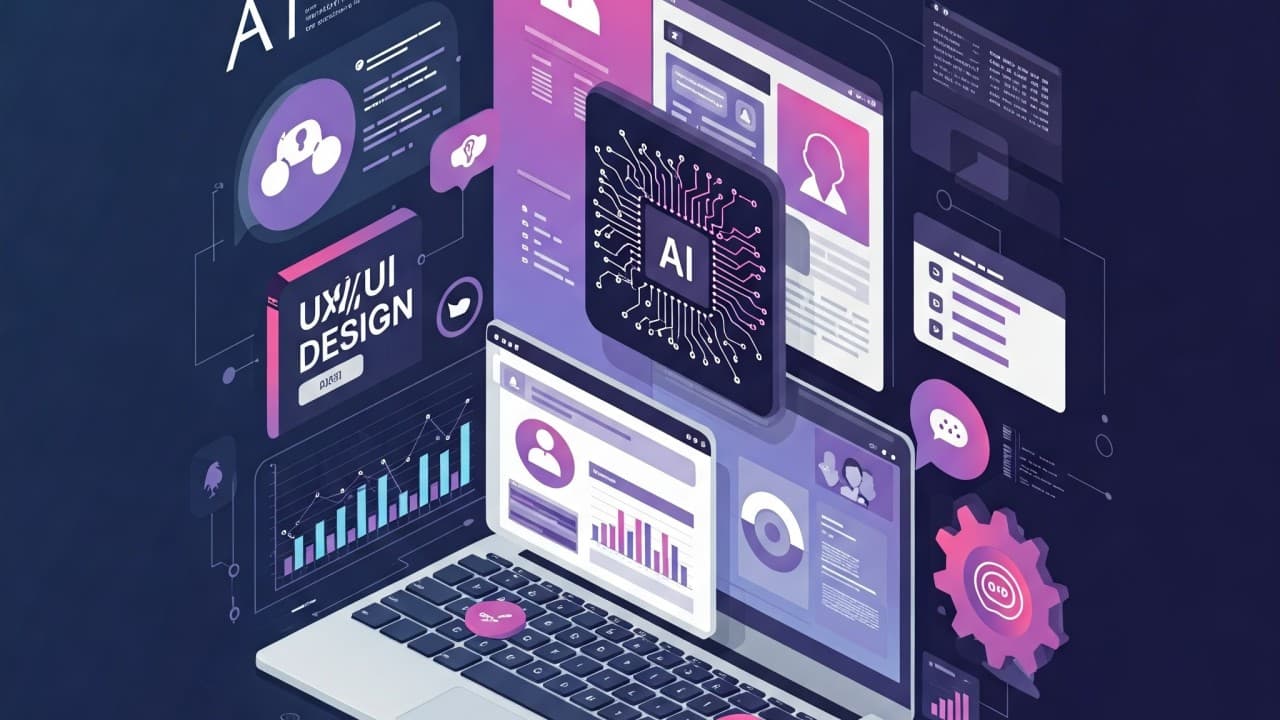
UX/UI design is where people meet AI. Students learn to direct it rather than defer to it: they research, sketch and draft first, then use AI to review their work — verifying sources, testing interview questions, flagging stereotypes in a persona or challenging a problem statement. AI only suggests; students decide what to accept or reject, and must explain why.
Bridging Industry and Practice for Skill Development
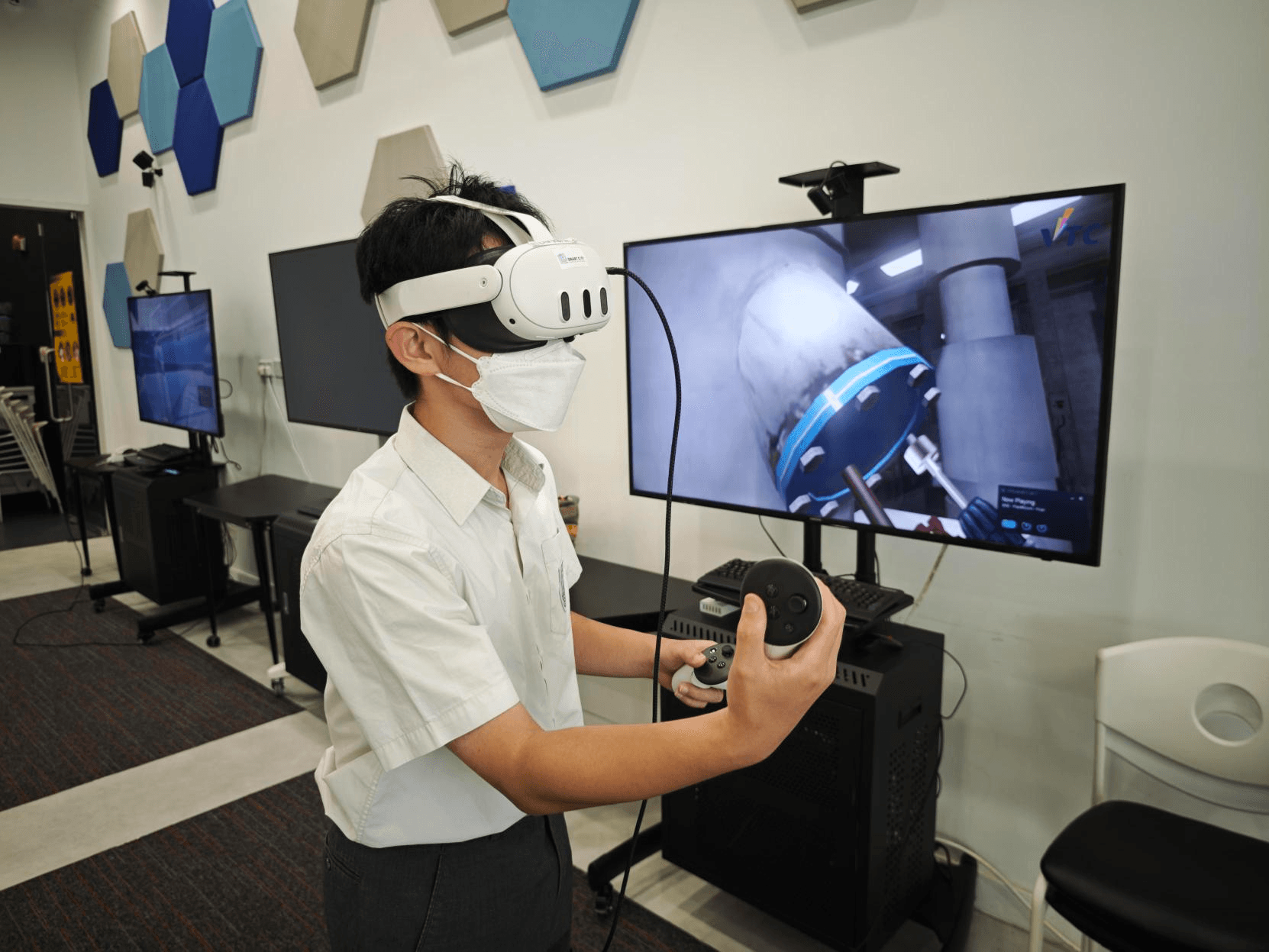
Our programs are taught by industry professionals with hands-on experience, using interactive and practical approaches in the classroom to boost student motivation and skill application. Through partnerships with companies ranging from startups to large enterprises, students take part in workplace experiences, company visits and a variety of extracurricular activities,including how working designers set boundaries on what AI is allowed to do in a live product.
What Makes this Program Unique
Master In-Demand Design Skills with Industry Tools
Students gain hands-on experience with professional design tools such as Affinity and Figma, working alongside AI image and layout generation tools so they learn to use both together rather than treat AI as a substitute for skill. By applying these tools in real projects, they build practical capability that gives them a head start in the UX/UI industry and beyond.
QF-Recognized UX/UI Design Program for Secondary School Students
Our UX/UI program is officially recognised under the Hong Kong Qualifications Framework (QF), offering students a structured, high-quality technology education valued by schools, universities and future employers across industries. The certification gives schools documented evidence of student achievement, useful when reporting the AI and digital education commitments in their School Development Plan.
Where People Meet AI: Designing the Interaction
UX/UI design is where people meet AI. Students learn to direct it rather than defer to it: they research, sketch and draft first, then use AI to review their work — verifying sources, testing interview questions, flagging stereotypes in a persona or challenging a problem statement. AI only suggests; students decide what to accept or reject, and must explain why.
Bridging Industry and Practice for Skill Development
Our programs are taught by industry professionals with hands-on experience, using interactive and practical approaches in the classroom to boost student motivation and skill application. Through partnerships with companies ranging from startups to large enterprises, students take part in workplace experiences, company visits and a variety of extracurricular activities,including how working designers set boundaries on what AI is allowed to do in a live product.
Program Outline
Looking to bring SEED Programs to your school?
Let’s Connect
What School Partners Says About SEED
View All
Kowloon Technical School
UXUI
I'm truly grateful, because not many NGOs are willing to support underprivileged schools or students with lower academic performance. I showed the students’ UX/UI work to the principal, and he couldn’t believe it was actually done by the students.

Teacher
Kowloon True Light School
UXUI
Your UX/UI course showed students from an Arts background that their skills have real potential and a promising future.
Teacher
Kit Sam Lam Bing Yim Secondary School
UXUI
Thank you for providing such a valuable learning opportunity. It allowed our students to gain deeper insights into the latest technological developments. Through the UX/UI Design course, they also acquired skills in digital graphic design. Their work was outstanding, and the program has truly helped nurture their diverse talents.
Vice Principal
What School Partners Says About SEED
View All
Kowloon Technical School
UXUI
I'm truly grateful, because not many NGOs are willing to support underprivileged schools or students with lower academic performance. I showed the students’ UX/UI work to the principal, and he couldn’t believe it was actually done by the students.
Teacher
Kowloon True Light School
UXUI
Your UX/UI course showed students from an Arts background that their skills have real potential and a promising future.
Teacher
Kit Sam Lam Bing Yim Secondary School
UXUI
Thank you for providing such a valuable learning opportunity. It allowed our students to gain deeper insights into the latest technological developments. Through the UX/UI Design course, they also acquired skills in digital graphic design. Their work was outstanding, and the program has truly helped nurture their diverse talents.
Vice Principal