IdeaPOP! 2026 Participants | Pearl and Joanna: Three Years of Pushing Beyond Themselves
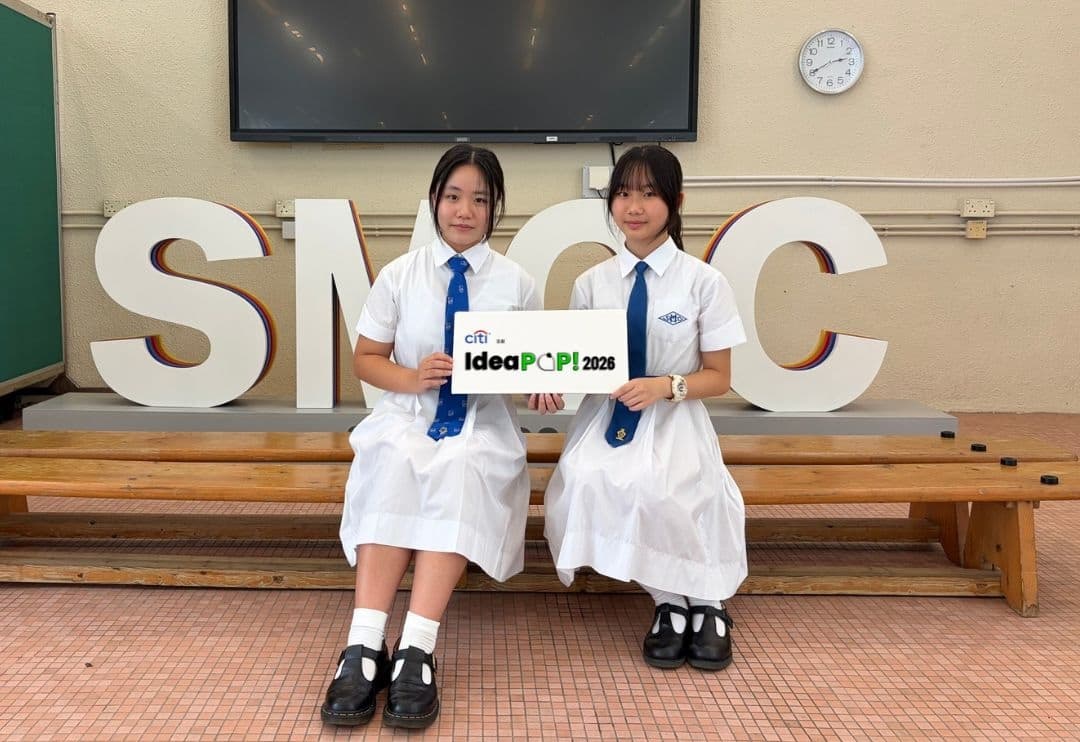
Pearl and Joanna from St. Mary's Canossian College reached the Top 10 of IdeaPOP! 2026 with their project "Neuro Link." What makes this even more remarkable is that this is already their third consecutive year participating in IdeaPOP!. Over these three years, they have returned to the competition each time with fresh curiosity, exploring different social issues, venturing into unfamiliar areas of knowledge, and developing each idea step by step into a solution with real potential.
What keeps bringing them back is the chance to start fresh every year, encounter new things, and witness an idea gradually take shape. For them, the most rewarding part is the journey from knowing almost nothing about a topic at the beginning, to eventually building a working prototype by the end. After each edition, they reflect on how they can push themselves even further the following year. This year, a question sparked by watching a medical drama led them, step by step, to "Neuro Link," a concept for an awake craniotomy monitoring system.
Starting From Scratch Every Year Is What Makes Them Come Back
IdeaPOP! encourages teams each year to develop new solutions rooted in real social issues, and brings in mentors from different professional fields to provide targeted guidance and support for each team's direction.
Pearl and Joanna have tackled different topics over the past few years, but each time, they choose to start fresh by observing, researching, and figuring out a direction together.
During the preparation phase, they read the news and pay attention to the experiences of people around them, though the right entry point rarely appears straight away. Finding a clear direction requires many rounds of discussion, piecing together scattered observations until a question worth exploring in depth finally emerges.
Pearl said, "The most memorable moment is when an idea suddenly pops out. One moment you still feel a bit lost, and then after a good conversation, everything suddenly becomes clear and you know exactly what to do next."
Finding the topic, however, is only the first step. After that, they have to navigate continuously between research, ideation, and execution. For them, IdeaPOP! is a process of learning by doing: from researching the issue and developing a solution, to organising their thoughts into a presentation plan and even building a prototype that can be demonstrated.
Using Technology for Good: From Social Observation to Real-World Impact
The team's entries have ranged from death education and elderly care to medical innovation this year. While the topics change annually, their commitment to using technology to address social needs has remained constant.
Pearl shared that many of their ideas come from the news or from the experiences of people around them. Their first-year project "Stand By Me" was inspired by a bereavement experience of one of their teammates. The team followed that thread and gradually developed it into a full project.
"We pay a lot of attention to the experiences of the people around us and the challenges they face. We also really enjoy reading the news and following current affairs to sharpen our awareness of what is happening in society."
This sensitivity to people and social needs turned their attention to the operating theatre this year, giving rise to the concept of "Neuro Link," a system designed to use technology to protect patients undergoing awake craniotomy.
"Neuro Link": It All Started with a Medical Drama
This year's "Neuro Link" began with a question that came up while watching a TV show. While watching the popular medical drama "On Call 36 Hours," Pearl and Joanna grew curious about awake craniotomy: how do surgeons monitor a patient's condition in real time during the procedure?
To find answers, they searched online and consulted a senior who works as a doctor. Gradually, they learned that medical teams assess patients through questions, conversations, and clinical observation during the surgery.
So could those responses be turned into more objective reference data?
That question became the starting point for "Neuro Link." They envisioned having patients perform simple games during surgery, while the system records data such as bilateral hand coordination and reaction speed, then organises the information into a format that doctors can reference.
Joanna described the system in two words: "real-time" and "accurate." As patients play the games during surgery, the system simultaneously converts their responses into readable information, allowing doctors to better understand the patient's current condition. It also incorporates more quantifiable indicators to provide a more precise basis for clinical judgement.
From a medical drama to a concept requiring research and validation, there was a great deal of knowledge along the way that they had never encountered before. As students without a background in the relevant subjects, they initially found medical terminology and technical questions confusing.
"In the first two years, we mostly searched for information online and figured things out on our own. This year, we wanted to challenge ourselves further by choosing a completely new field. It was thanks to our school connecting us with a medical team and doctors that we could ask questions directly, which made everything much clearer."
What they have gained through IdeaPOP! goes beyond technical skills. Pearl admitted that by observing other teams' presentations over the years, they have grown more attentive to whether a solution actually addresses a real need and whether it is commercially viable. This year, instead of focusing solely on programming and technology, they brought together perspectives from technology, business, and medical professionals. This three-way integration allowed "Neuro Link" to become more than just a tech project, developing into a solution that is closer to real clinical application and carries genuine potential for practical use.
Balancing Studies and Competition, Getting Through the Low Points Together
When asked whether they had ever considered giving up, Pearl recalled that after entering Secondary Four last year, increased academic pressure and busy school responsibilities made it difficult for her to keep up with the STEM project development. There was a point when she felt burned out and thought about quitting.
"A lot of the time it was Joanna who kept me going. We divided the work between us, and last year she took the lead, guiding us in finding our direction." Pearl spoke with deep gratitude.
For Joanna, the motivation to persist also came from what makes IdeaPOP! itself compelling. She noted that unlike traditional competitions, IdeaPOP! pushes teams to start from scratch each year with a completely new idea and explore a different social issue.
"Starting from knowing almost nothing, and then actually building a prototype step by step — that feeling of creating something from nothing is truly fulfilling."
She said that after finishing each year, she would find herself wondering how much further they could go the following year. Each new edition, she would set a goal to do better than before. That mindset of always wanting to surpass themselves became the drive that carried them through the pressure of balancing studies and competition.
You Don't Need to Know Everything to Join IdeaPOP!
Looking back on three years of IdeaPOP!, Pearl and Joanna feel that the competition has given them the opportunity to transform bold ideas into real proposals, while also exposing them to different social issues and helping them build business knowledge and presentation skills.
Joanna encourages interested students not to be put off by a lack of STEM or coding knowledge.
"IdeaPOP! doesn't actually require you to know a lot about STEM or programming. As long as you have a good idea or a genuine desire to help people, you can already do very well in this competition."
They also hope that students will not be afraid to take that first step. The competition offers workshops and mentors, and even if you are not very familiar with the topic at the start, you can learn along the way and gradually shape your ideas.
Pearl and Joanna never set out with a perfect idea. They started with a question, a sense of curiosity, and then found their answers one step at a time. Perhaps that is exactly what draws them back to IdeaPOP! year after year: every ending is the beginning of something new. And that is why they keep choosing to start over.