
Dataverse | A Concert Ticket Scam That Cost a Student HK$300,000: What Parents and Educators Need to Know
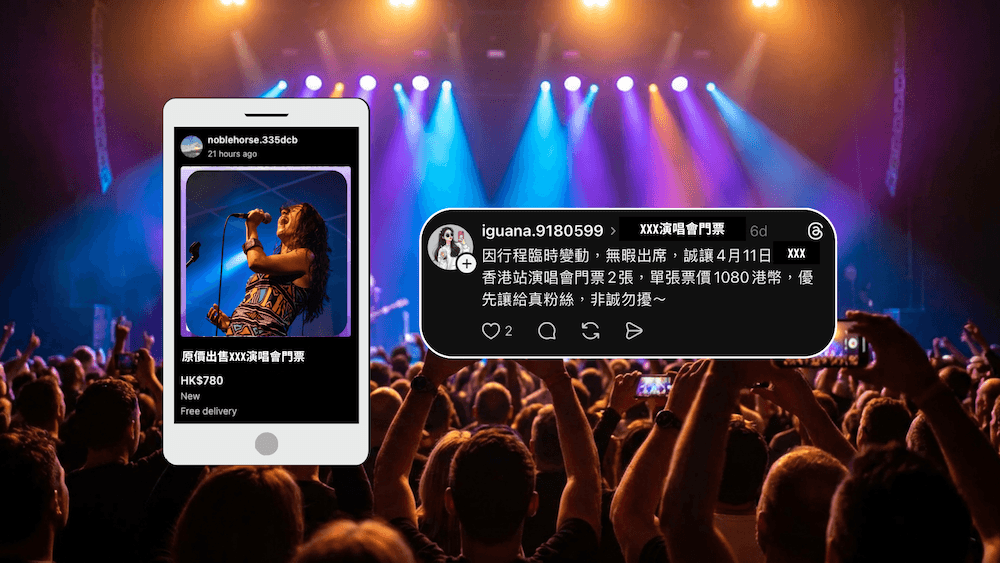
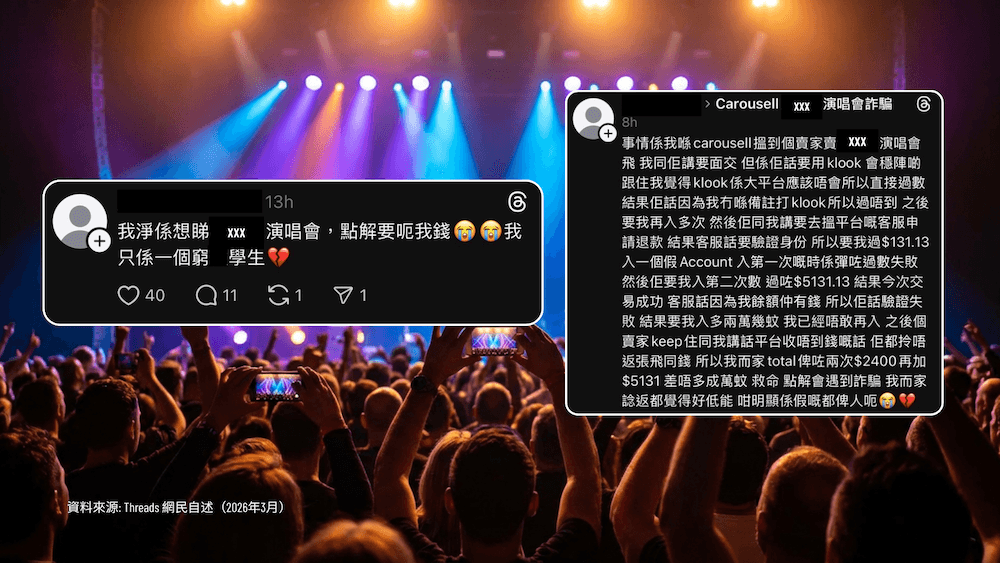
In recent crime statistics, scams have overtaken many traditional crimes to become one of the most common offences in Hong Kong. For young people, scams are no longer just something you see in movies. They now appear every day as links and messages on social media, investment groups, and online shopping apps.
Figures from the police and related organisations show that students have become one of the main groups of victims in online financial scams, with losses often running into the millions. If we still believe that "kids don't have enough money to be scammed," that may be exactly the blind spot that scammers are counting on.
Victims Are Getting Younger — The Real Picture of Online Scam Losses Among Hong Kong Youth
Hong Kong's online scam problem has worsened sharply in recent years, and the victims are getting younger. In 2025, a total of 43,212 scam cases were recorded across Hong Kong. In the first eight months alone, 28,379 cases were reported, with losses reaching HK$5.02 billion. Scam methods have also kept up with the times. Since the opening of the Kai Tak Sports Park, online shopping scams involving concert tickets have risen sharply — there were 2,805 such cases last year, up 61.8% from the year before. This shows how scammers take advantage of young people's spending habits and interests.¹
The losses among students are especially alarming. The Hong Kong Institute of CPAs' 2025 survey on the financial literacy of primary and secondary school students found that nearly one in ten students had lost money to a scam, with an average loss of around HK$1,100. Many cases involved online shopping, online gaming, and electronic payments.² The situation among university and college students is even more serious. In the first eight months of 2025, there were 270 telephone scam cases involving students from tertiary institutions. Local students lost around HK$32 million, while Mainland students lost as much as HK$75 million.³
These numbers reveal two hard truths. First, students' savings, part-time income, tuition fees and living expenses entrusted by parents, and even payment methods linked to family accounts can all be targets for scammers. Second, victims are getting younger. The problem is no longer limited to university students — nearly one in ten primary and secondary school students has also suffered financial losses, showing that scammers are now targeting younger children who are less aware of the risks.
Case Study — Secondary School Student Buys Concert Tickets Online, Loses Hundreds of Thousands
In early 2026, police announced an operation that uncovered 269 online shopping scam cases within three weeks, involving over HK$6 million. More than 60% of those cases were related to concert tickets, and more than 60% of the victims were aged 30 or under, including many student fans.⁴
One representative case happened in the most ordinary everyday situation. A victim saw someone selling concert tickets online for around HK$3,500, which seemed reasonable. After making payment, the seller repeatedly claimed that the "transfer had failed" and kept asking the buyer to send more money. In the end, the victim lost a total of HK$300,000.⁴
This is not an extreme case. Among the 11,449 online shopping scam cases recorded between 2023 and 2024, around 30% involved second-hand trading platforms.⁴ This is a trap that any student who loves following their favourite artists could easily fall into.
1. Why can young people end up losing such large amounts?
The money in a young person's account often does not belong to them alone. Pocket money, part-time earnings, tutoring fees, and activity expenses can add up quickly. With electronic payments so common, transferring money takes only a few seconds, leaving almost no time to stop and think clearly. Scammers know this well. Every step is designed to make the victim feel that "one more transfer will fix everything," until it is too late to turn back.
2. Why don't they tell their parents or teachers straight away?
For many students, buying tickets on second-hand platforms is already seen by some parents as "wasting money." Many expect that asking for help will bring criticism before comfort. After being scammed, the shame and self-blame only grow stronger, making it even harder to speak up. On top of that, scams can unfold very quickly — from seeing a post to making multiple transfers can all happen within just a few hours. Scammers deliberately create time pressure so victims have no chance to seek help or check the facts.
3.What does this case teach parents and educators?
The most important lesson from this case is not just "why did they fall for it," but "why did they face it alone." If the victim had told a parent or teacher after the very first transfer, the loss might have stopped at HK$3,500. That is why the most important thing for parents and educators is not to add more rules, but to make students believe: "Even if I made a mistake, I can still speak up." How to build that kind of open environment is the key topic in the next section.
In terms of knowledge, students need to understand a few basic principles clearly:
- A genuine seller will never ask for more payments after money has already been transferred. A "system error" is never a valid reason to keep paying.
- Any transaction that pressures you to "decide quickly" is worth pausing to verify.
- Learn to recognise common signs of fake sellers, such as brand-new accounts, no transaction history, or refusing to meet in person.
Concert ticket scams keep happening because they target exactly the situations students feel most comfortable and relaxed in — following artists, chasing tickets, and limited-time offers. Every element is deliberately designed by scammers. The journey from HK$3,500 to HK$300,000 is not one impulsive decision — it is a carefully engineered process, one step at a time.
What Can Parents and Educators Do? Three Practical Levels
Hong Kong Police, the Education Bureau, and cybersecurity experts all stress the same point: preventing young people from falling into online financial scams cannot rely on just telling them "don't click on anything suspicious." It requires action at three levels — relationships, knowledge, and practical tools.
1. Relationship Level: Create a Safe Space Where Money Can Be Talked About
Whether a child is willing to ask for help matters more than whether parents know every scam method. Try saying this out loud:
"Even if you've been scammed, come to me first and we'll figure it out together. Money can be replaced — your safety is what matters most, and I won't blame you."
This one sentence can greatly reduce the chance of a child hiding the problem out of fear of being blamed. In the classroom, teachers can regularly share recent real-life cases — for example, from the police's "CyberDefender" resources — so students understand: "This doesn't only happen to me. Being scammed doesn't mean I'm stupid."
2. Knowledge Level: Turn "Concert Ticket Common Sense" Into Basic Life Knowledge
A few clear, easy-to-remember rules can go a long way:
- Always try to buy concert tickets through official channels or approved ticketing platforms. Buying through Instagram, Telegram, or second-hand platforms carries real risk, no matter how genuine the seller's post appears.
- If a seller asks you to keep transferring money after payment — for reasons like "the system hasn't processed it," "bank limits," or "needs further confirmation" — treat it as a scam immediately. Stop all transfers and keep all chat records.
- "Limited time only," "it'll be gone soon," and "you have to decide now" are the most common pressure tactics used by scammers. The more urgent it feels, the more important it is to stop, take five minutes, and call a parent or friend to check.
- In a genuine second-hand transaction, a seller will never ask you to "split the payment into multiple transfers" or "use different bank accounts." If you encounter these requests, stop immediately no matter how much you have already sent, and report it to the police.
3. Practical Tools Level: Real Resources and Channels
- Encourage young people to use the "Scameter" app to check a seller's social media accounts, payment links, or phone numbers before making any purchase. They can also search the seller's name or account for negative reviews and check when the account was created and whether it has any transaction history. Build the habit of "check first, pay later."
- Teach them that when facing a suspicious transaction, they don't have to figure it out alone. They can call the 18222 anti-scam hotline to ask for advice, or reach out to a school social worker or a trusted teacher. One extra question is often enough to stop a scam in its tracks.
- At home, parents can review the security settings of commonly used shopping and payment apps with their children, and agree in advance on a "transfer limit" — any amount above that limit must be confirmed with a parent before the transaction goes through. This is not about restricting freedom; it is about adding a buffer between impulse spending and potential scams.
A Word for Parents and Teachers
Today's young people are often called "digital natives," yet they have also been shown to be a high-risk group for online financial scams. They know how to use apps, but may not know how to spot unreasonable instructions. They know how to open an account, but may not know how to protect their financial footprint.
For parents and educators, the most important things are not memorising every scam method. They are about doing three things:
- Being willing to talk with children about money and risk, rather than avoiding the subject.
- Being willing to admit that "even adults get scammed," reducing blame and building teamwork instead.
- Being willing to be the first person they think of turning to when something goes wrong.
When we are willing to take that one extra step — to learn and to have open conversations — our children will have one more reason to stop and think before responding to the next "urgent transfer request."
If your school would like to further strengthen student training on this topic and other cybersecurity awareness areas, you may consider enrolling in our organisation’s free online course, “Guardians of the Dataverse” For details, please contact us.
¹ https://www.police.gov.hk/ppp_tc/01_about_us/cp_ye.html
² https://www.stheadline.com/investment/3504972/
³ https://news.rthk.hk/rthk/en/component/k2/1826389-20251008.htm
⁴ https://news.rthk.hk/rthk/ch/component/k2/1842940-20260206.htm